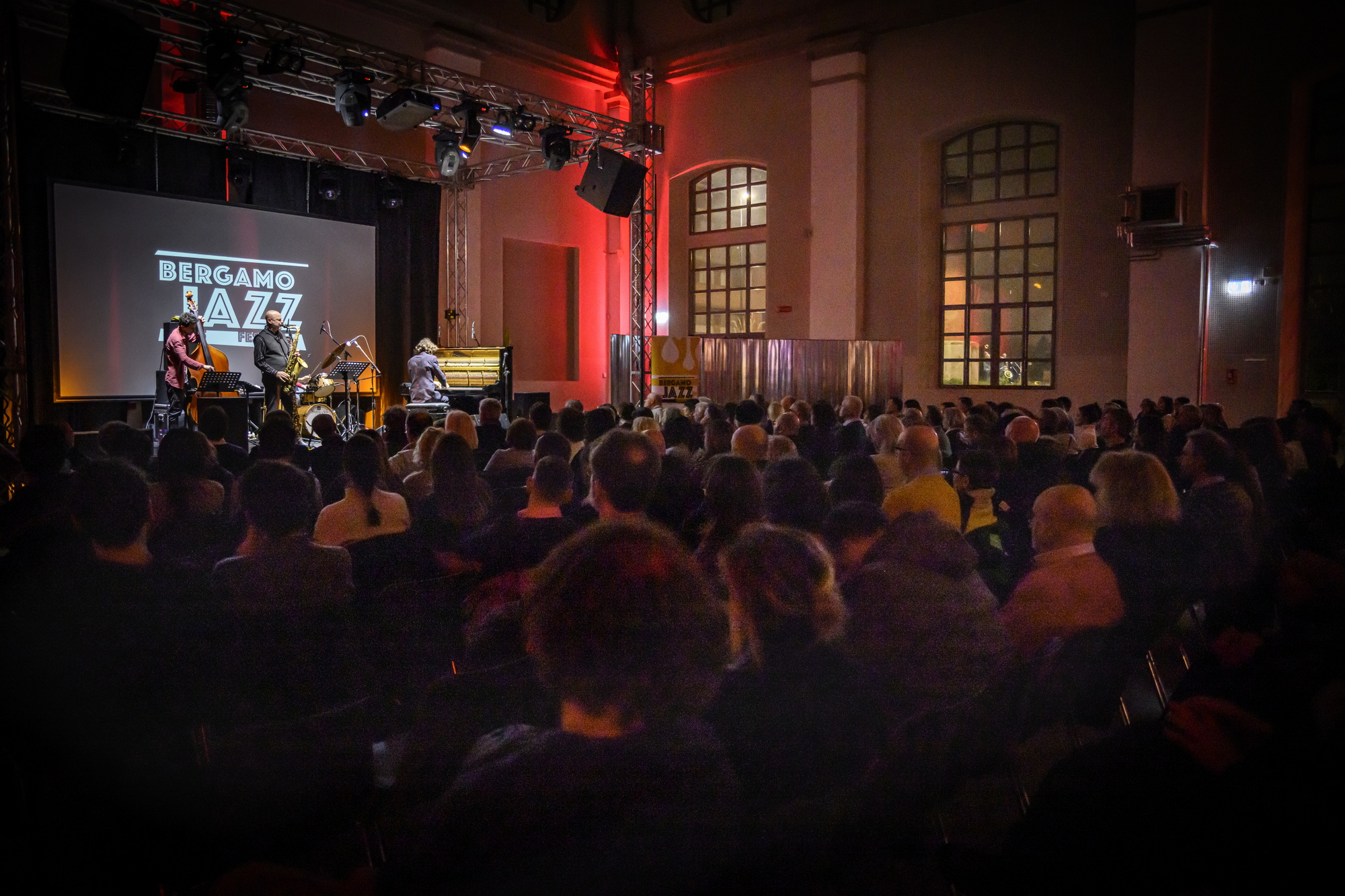
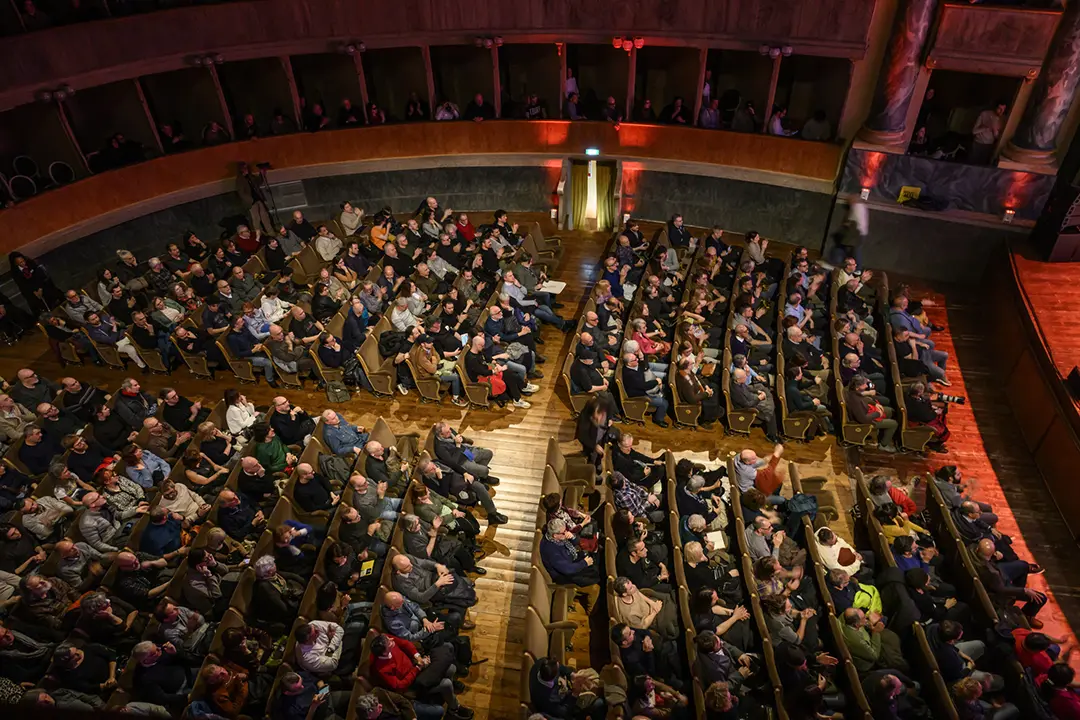
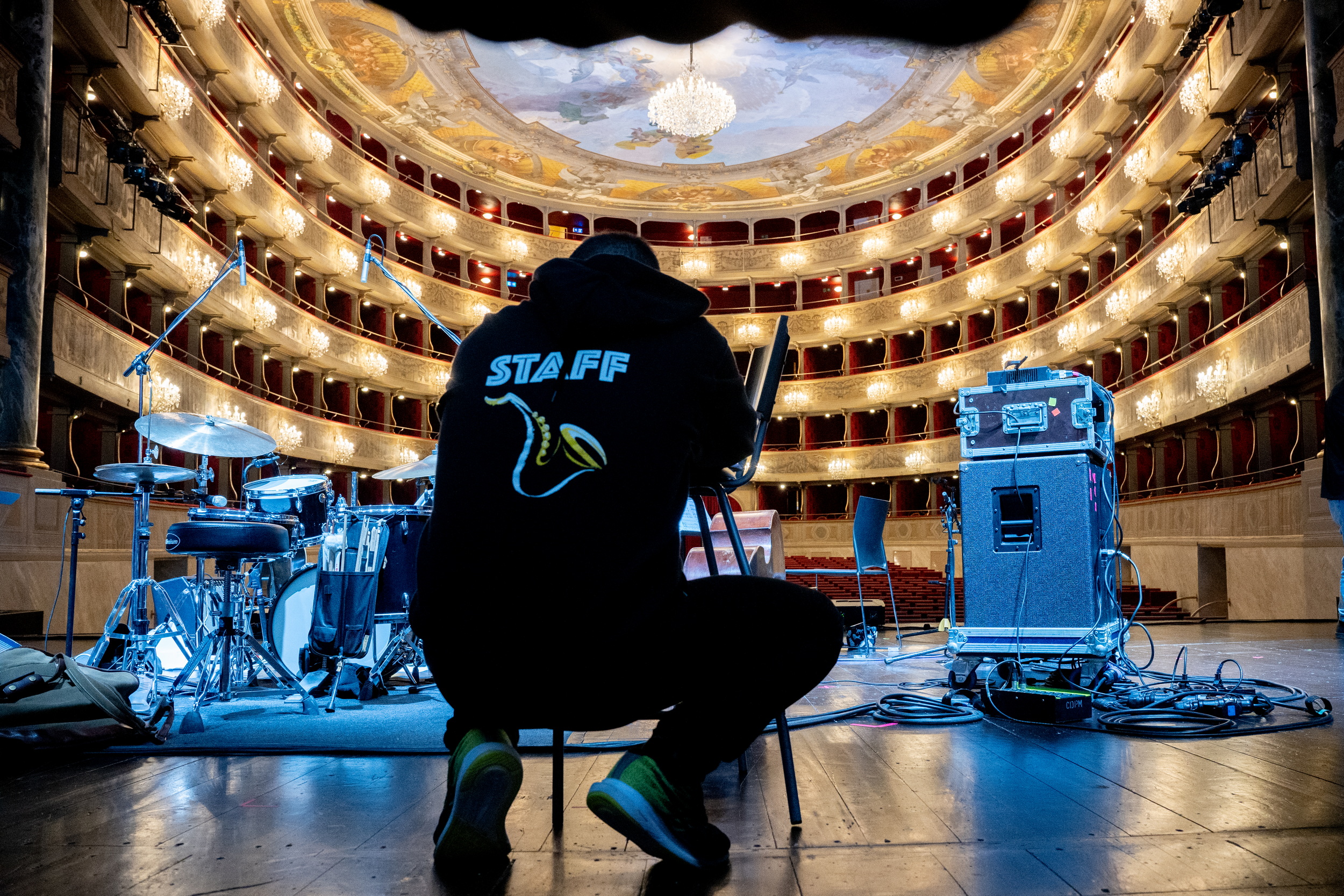
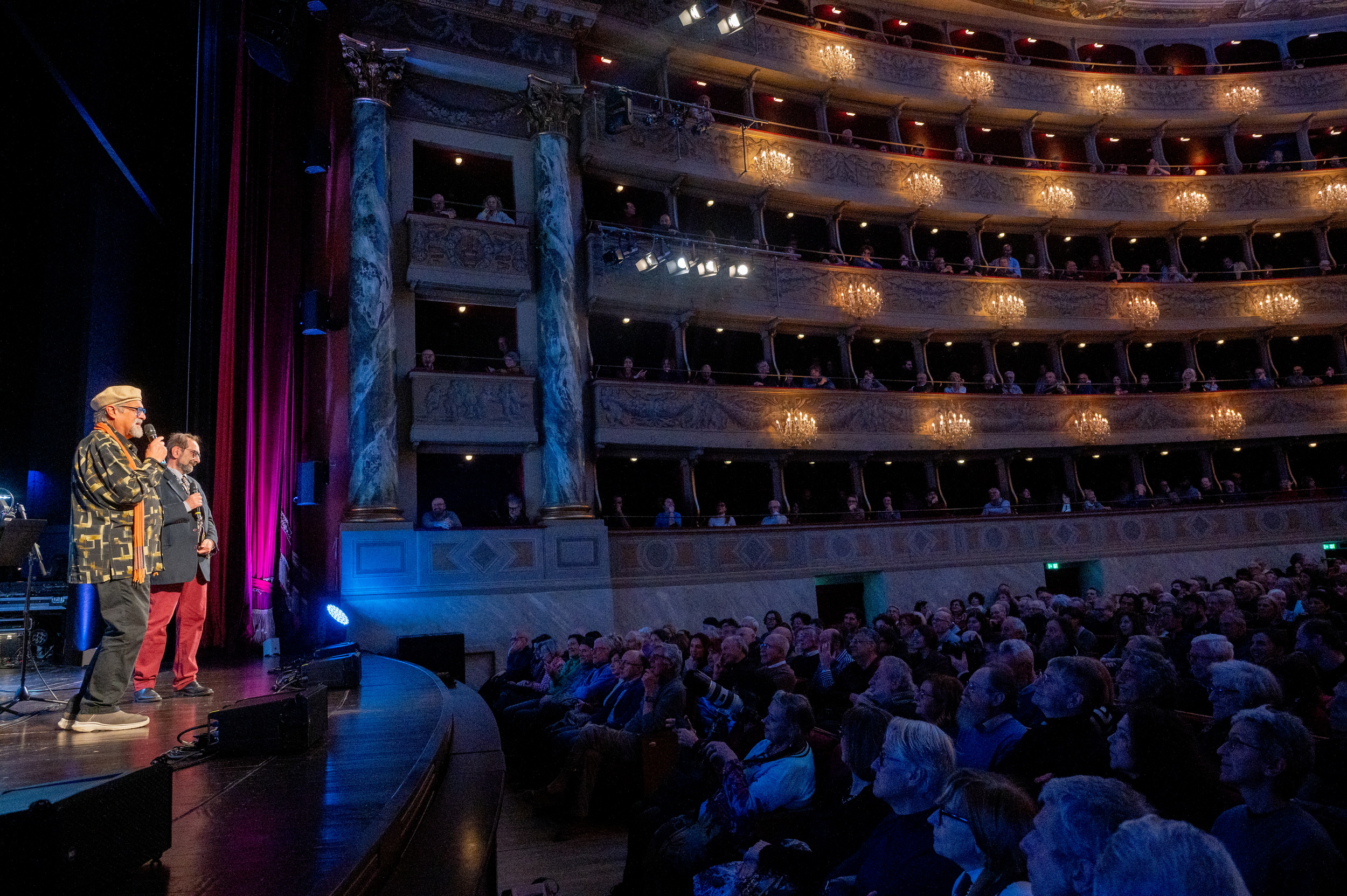
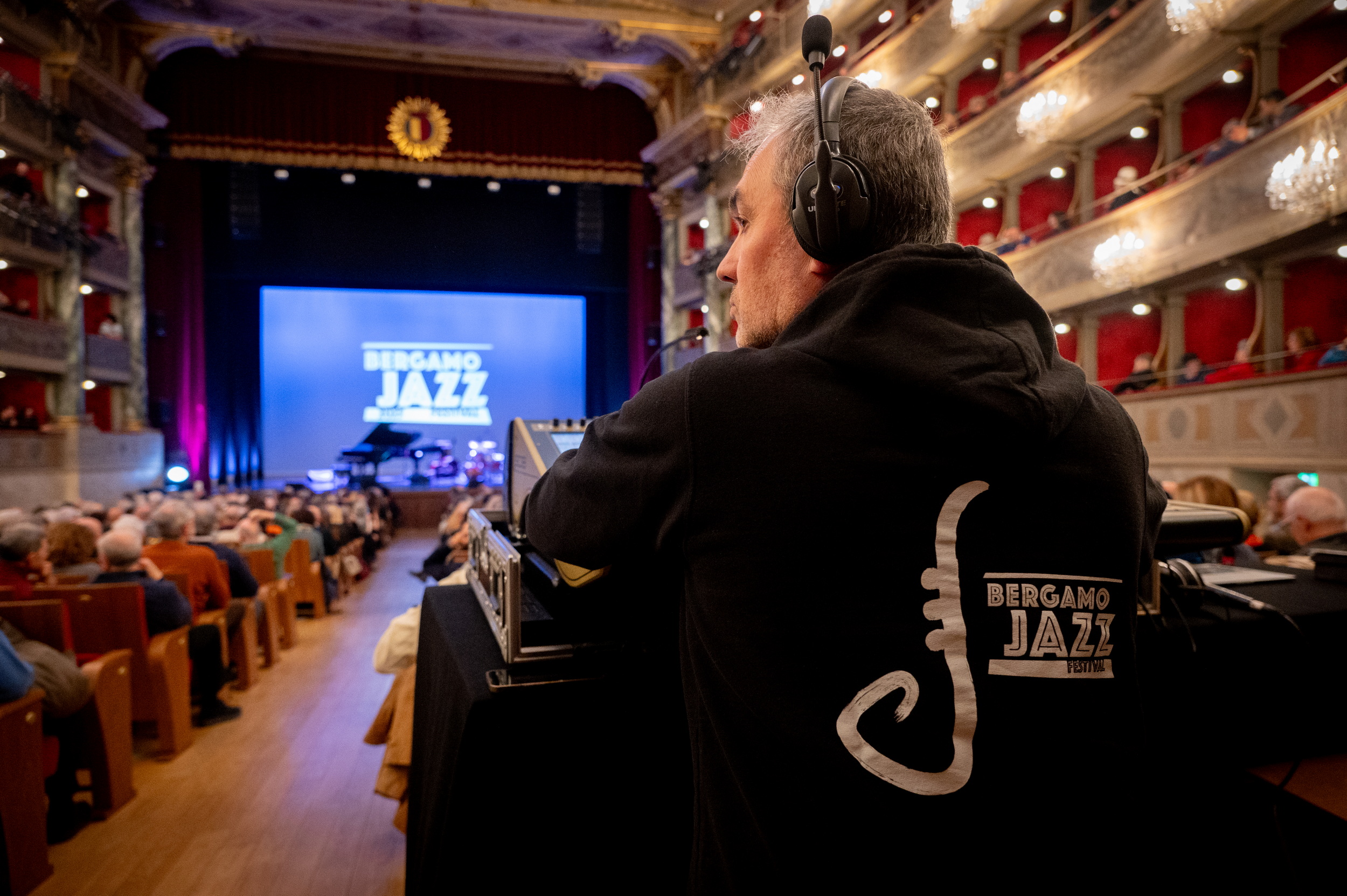
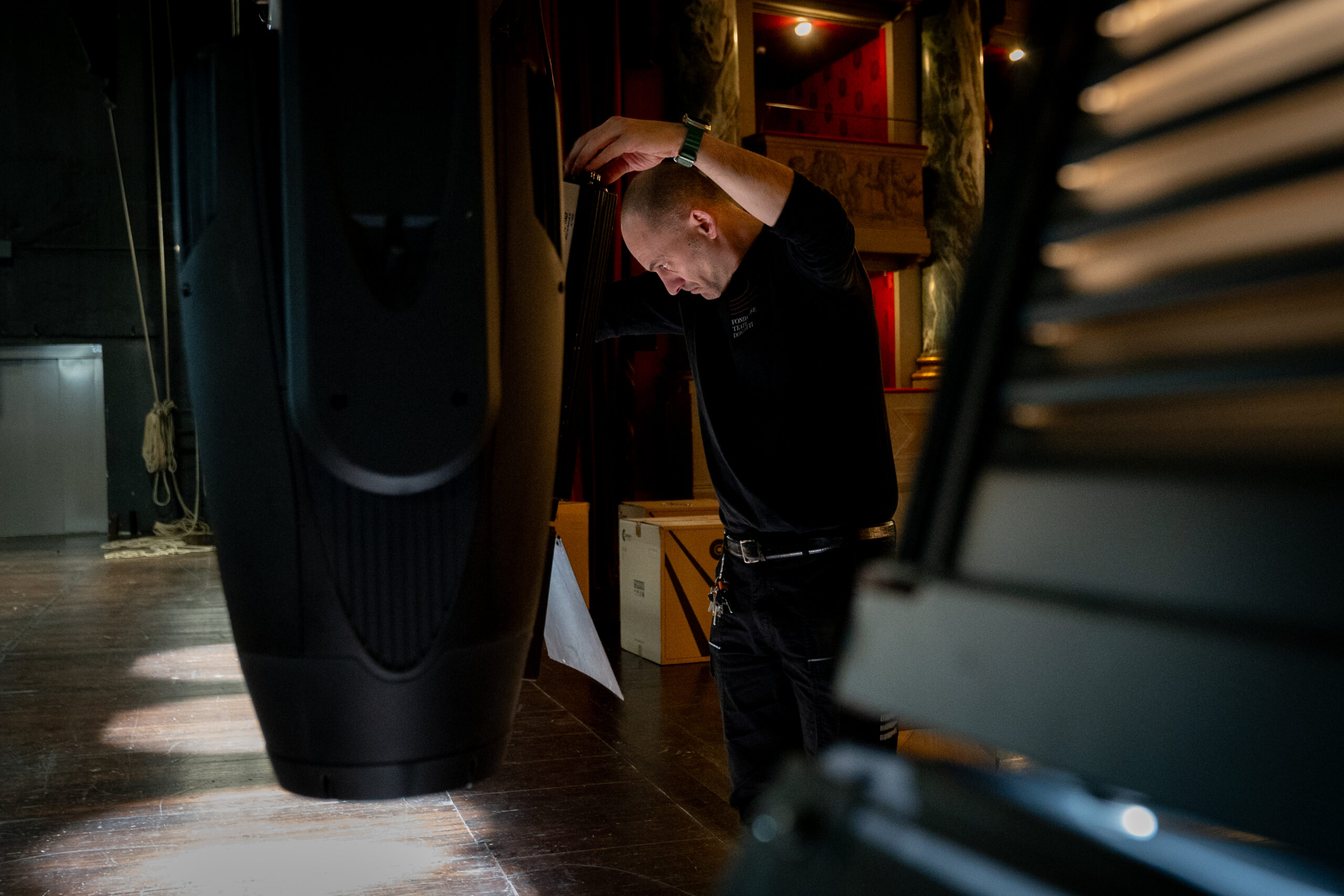
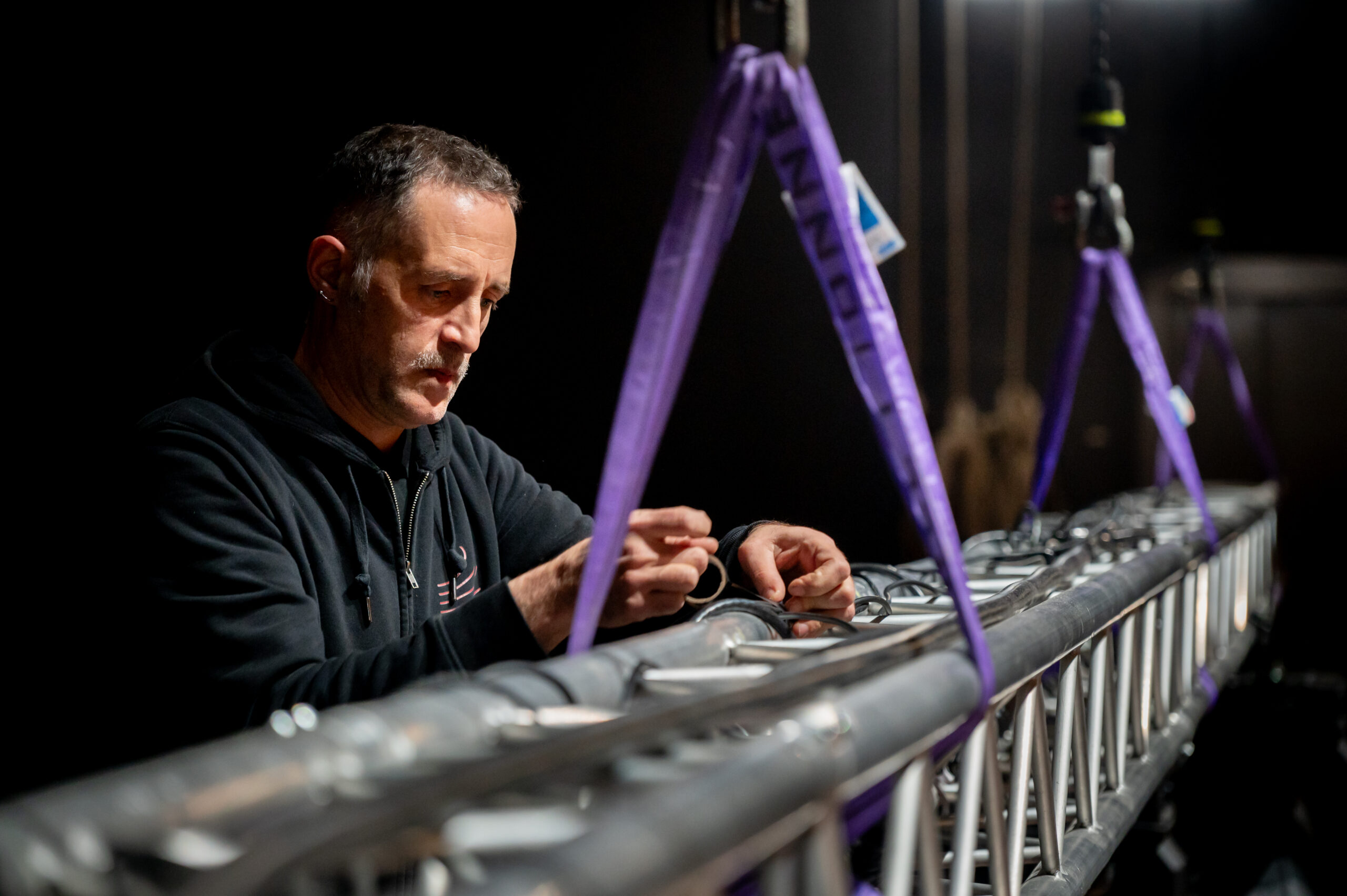
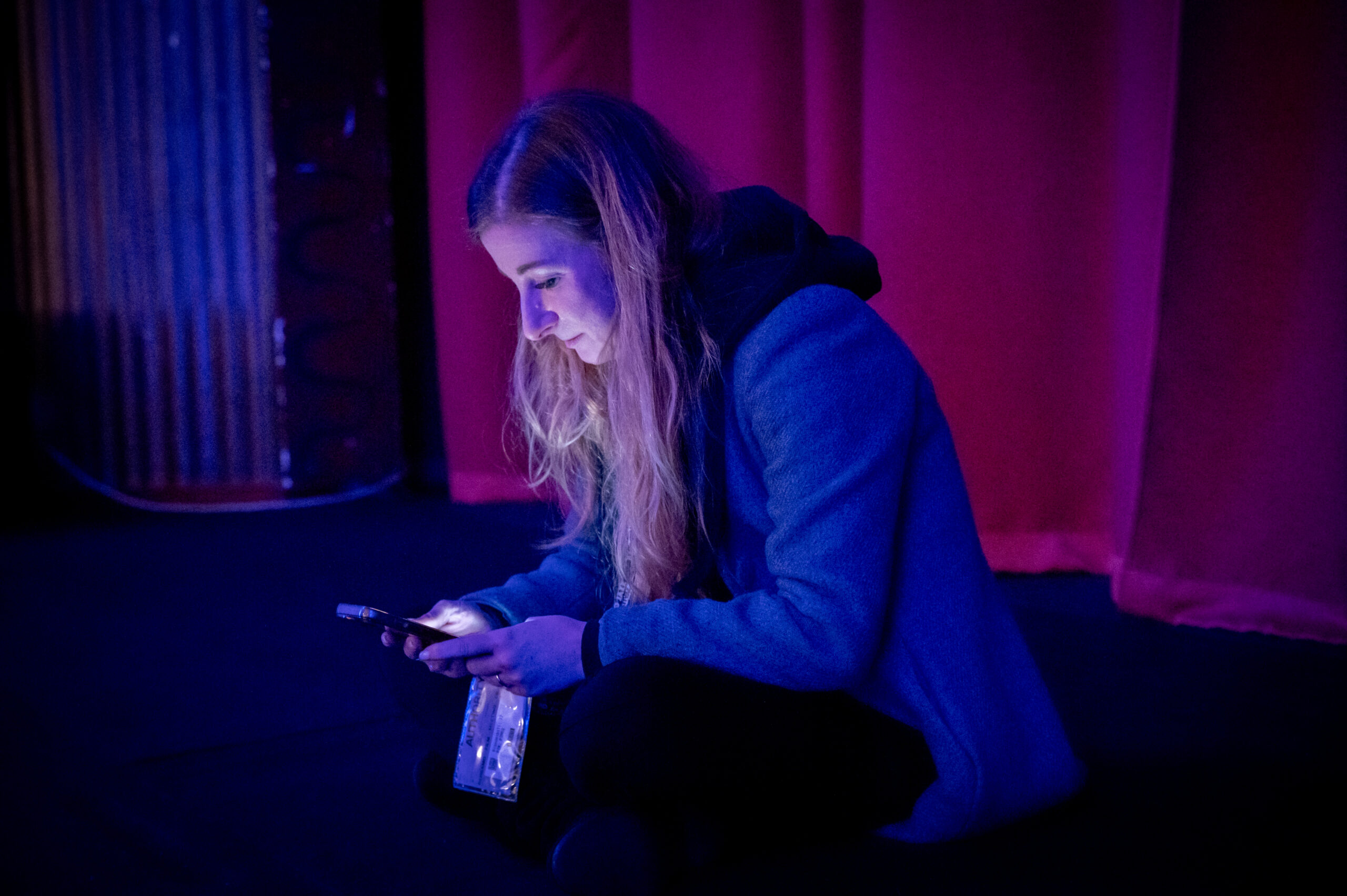
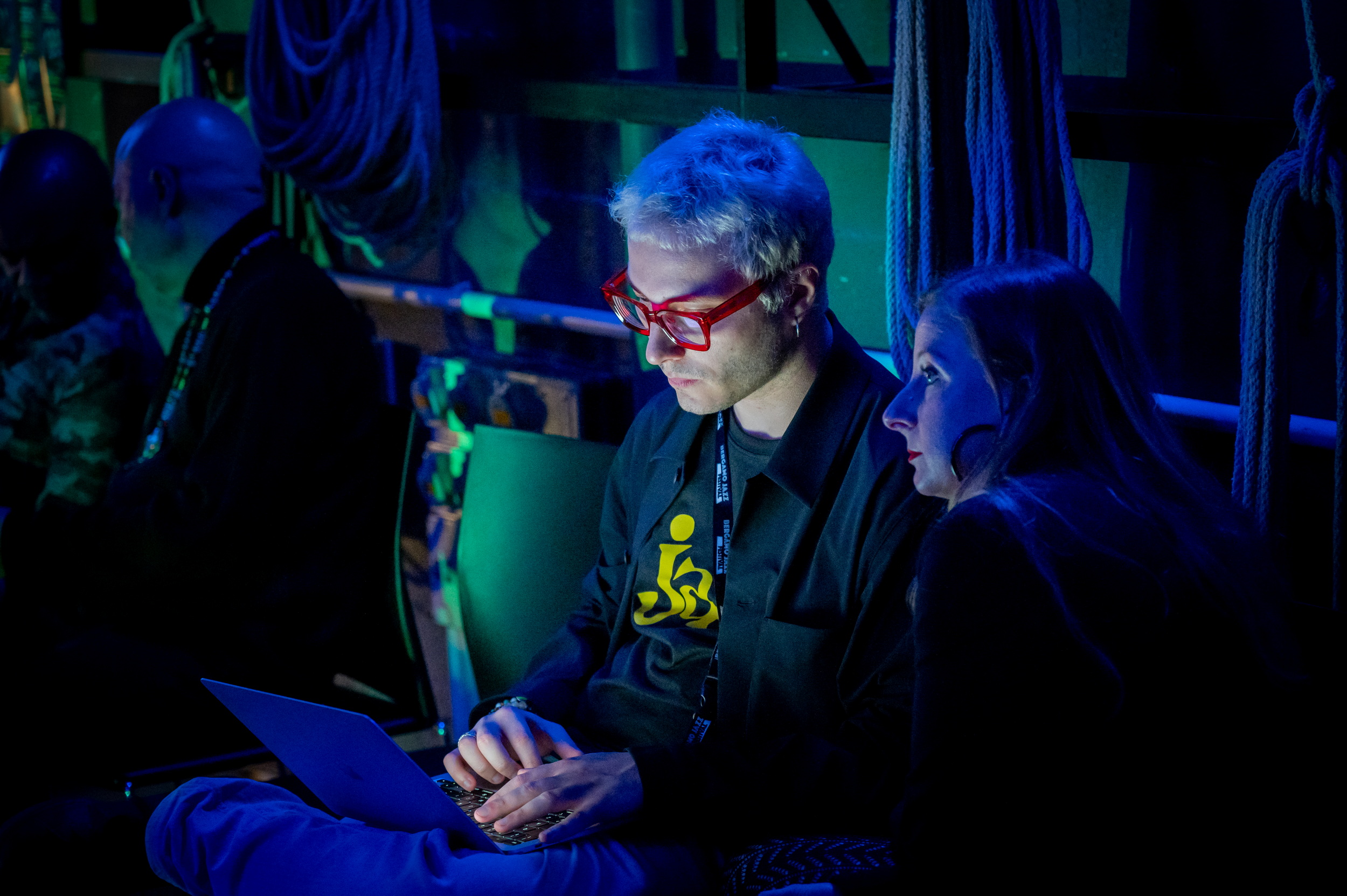
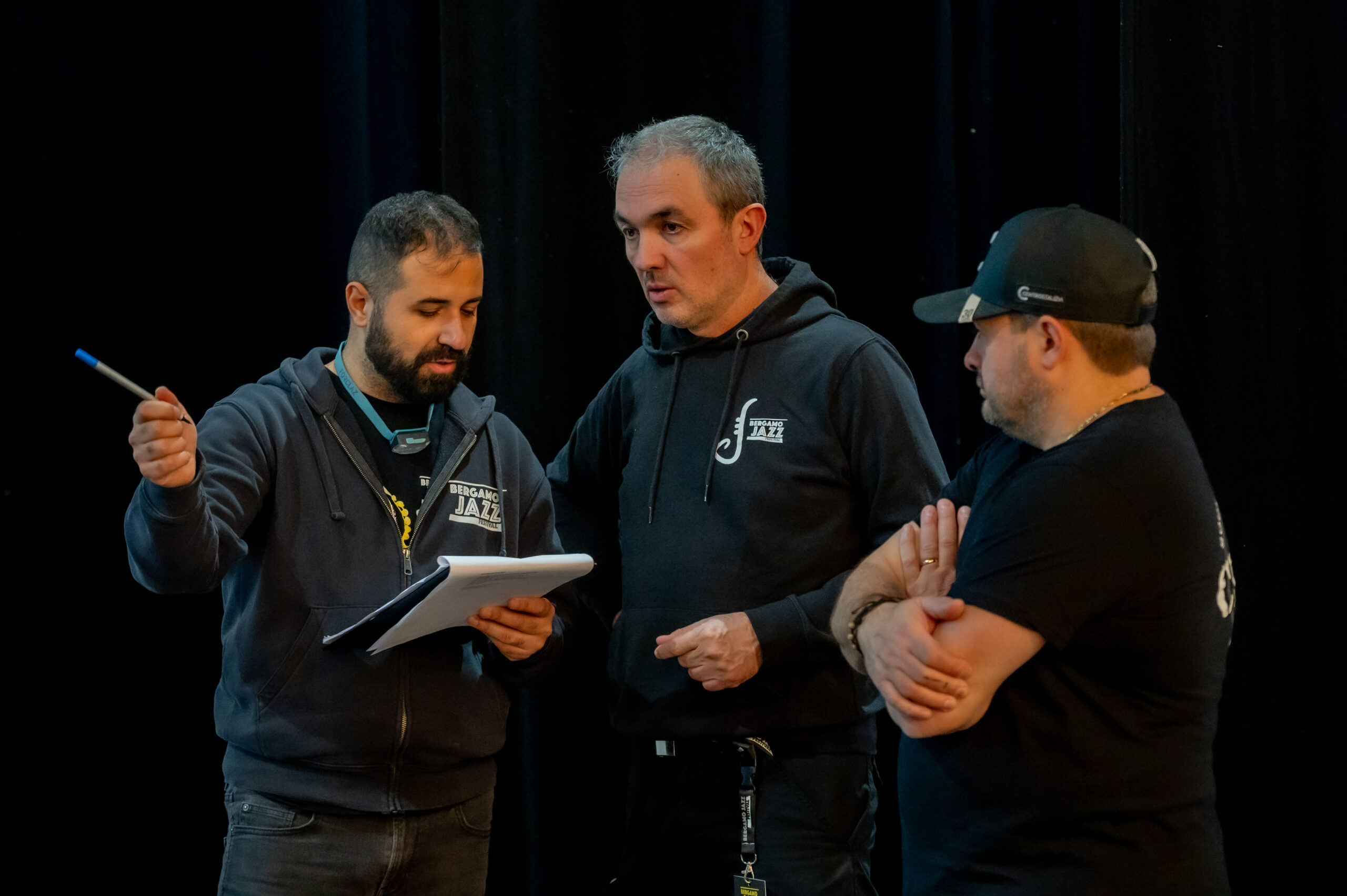
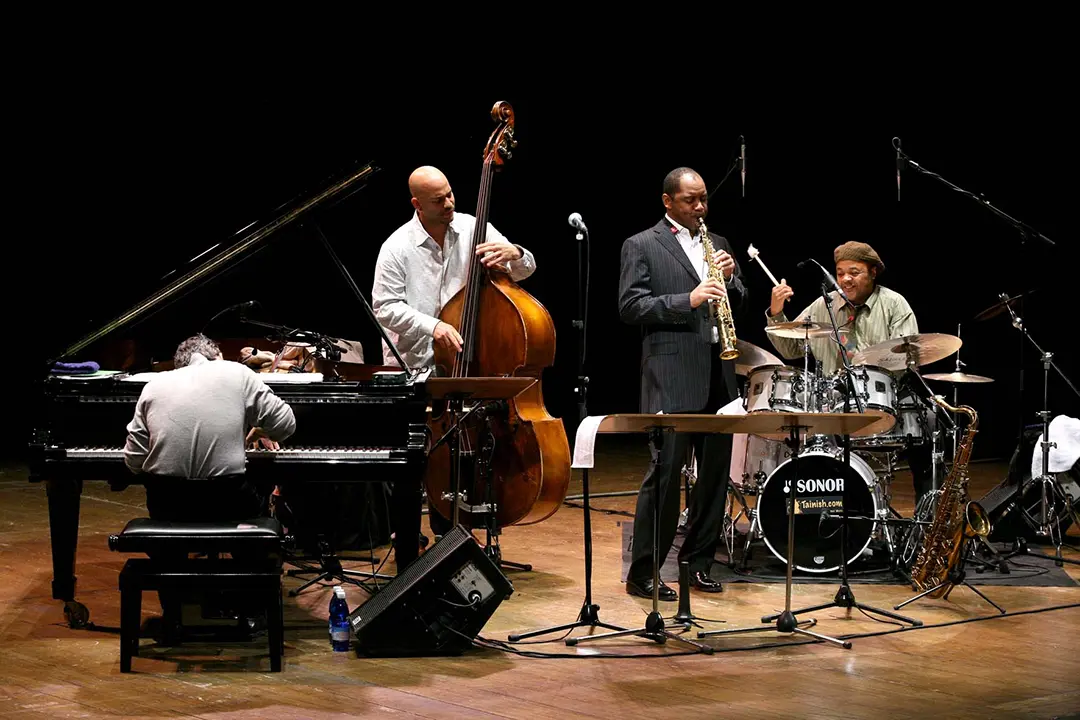
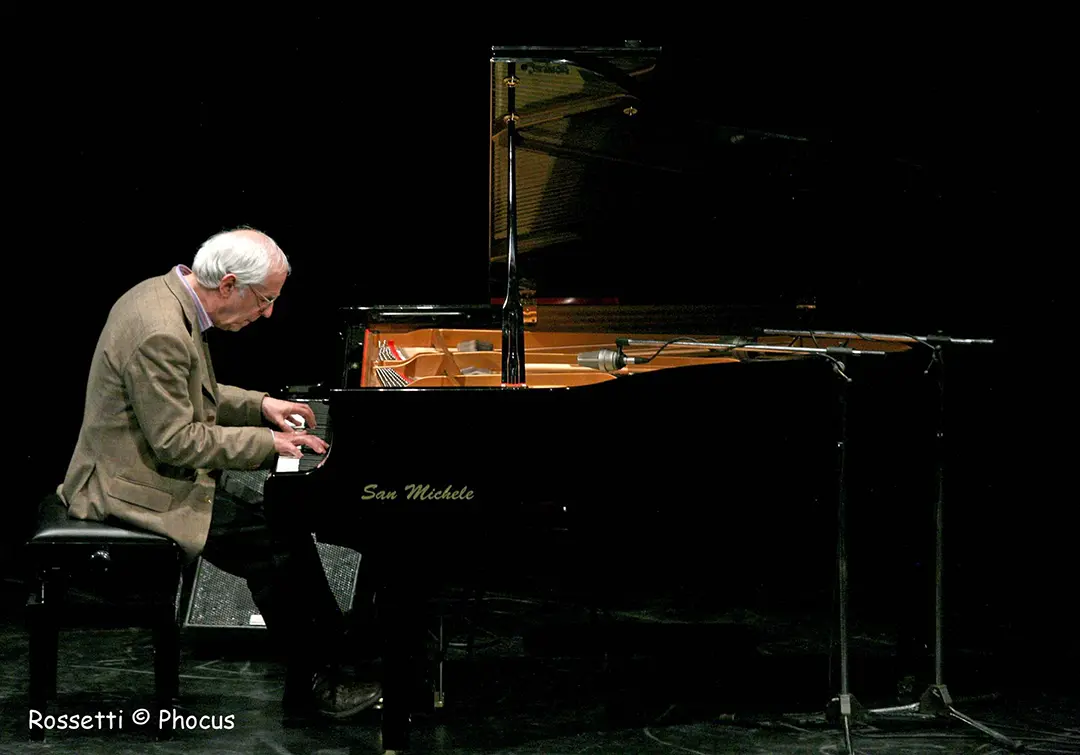
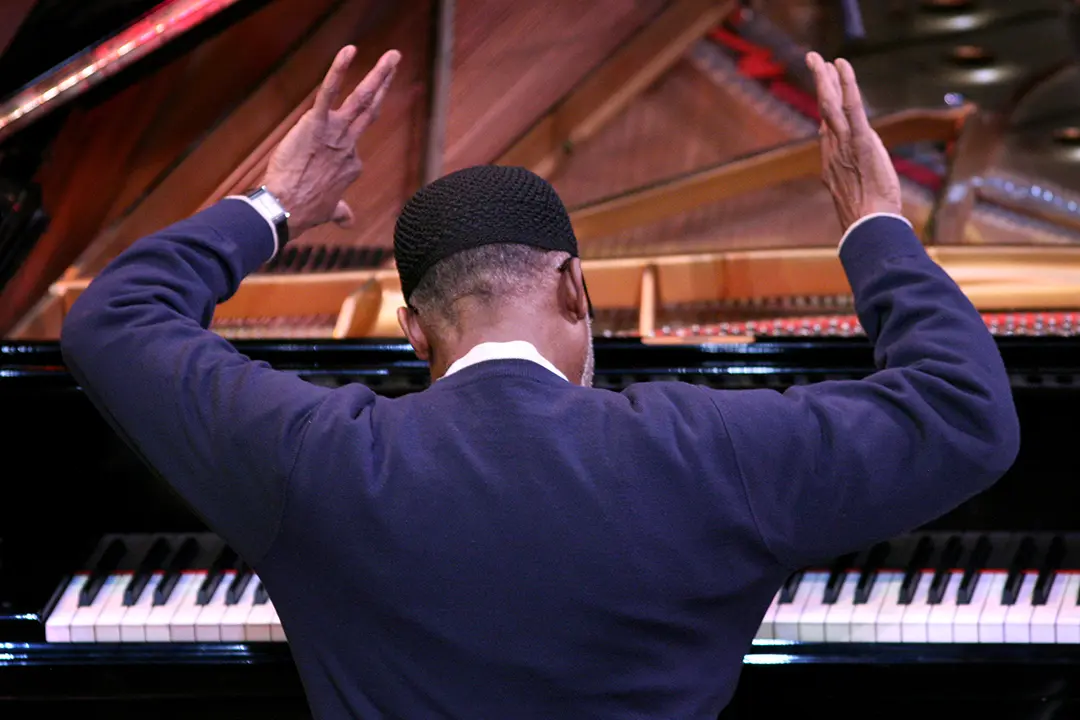
BergamoJazz Festival, organized by the Donizetti Theater Foundation of Bergamo, is a music festival unanimously considered, by the public and the press (national and foreign), one of the most prestigious Italian (and not only) jazz events, a privileged showcase on the world of international jazz and its different stylistic components, through artists of absolute prominence, protagonists of a music that has rightfully earned the definition of “universal,” and as such recognized byUNESCO.
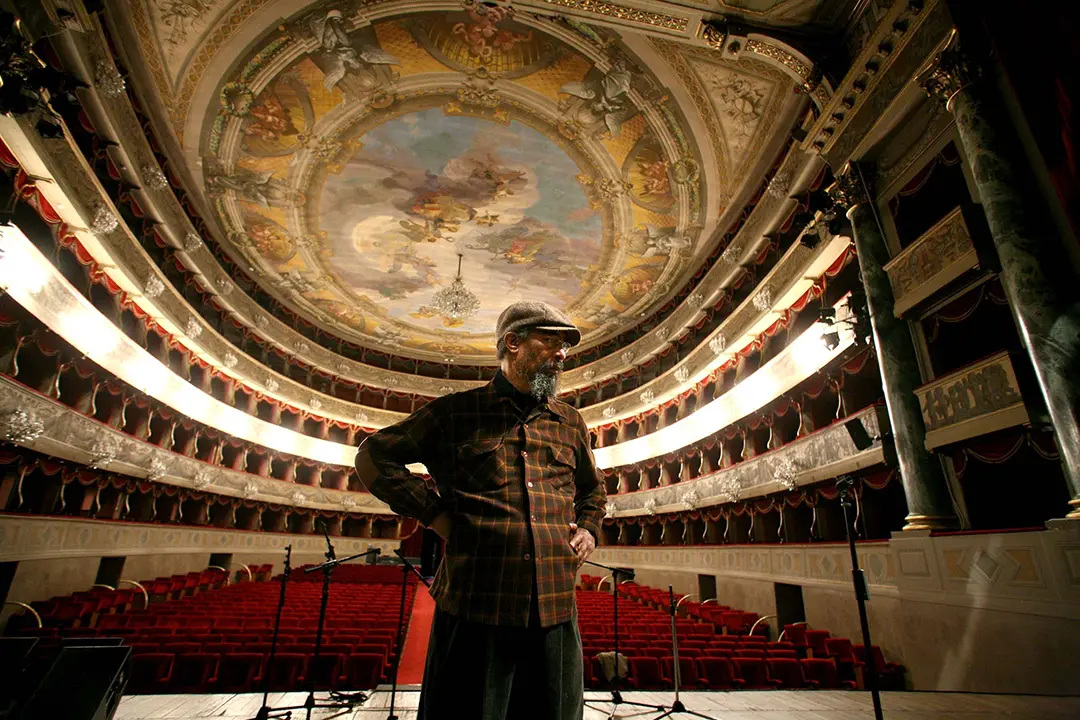
While its natural international scope has remained unchanged over time, the festival has also gradually consolidated its ties with the local area, through a network of collaborations with cultural and business associations that has deepened over time. Special attention is paid, above all, to those associations that are cultural reference points for young people. Bergamo Jazz stands, therefore, in a perspective of openness and innovation: in the festival’s programs, the dialogic relationship between tradition and innovation is always evident, which is also reflected in the choice of venues for the concerts, spaces habitually frequented by young people and spaces that symbolize the historical and cultural heritage of the City.
Since 2017 Bergamo Jazz has been a member of I-Jazz, a national association that brings together the main Italian jazz festivals and is a point of reference for the MIC – Ministry of Culture for intervention policies in favor of the Italian jazz world. Joining I-Jazz is further evidence of the desire to network, to initiate a comparison with other national realities operating in the same sector.
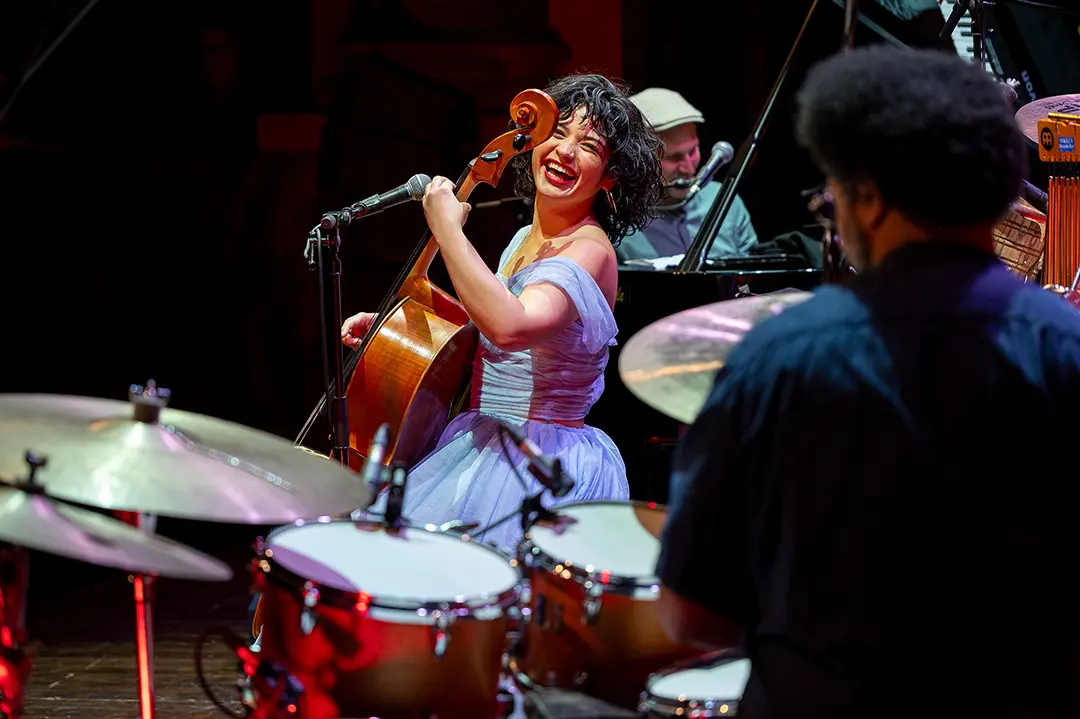
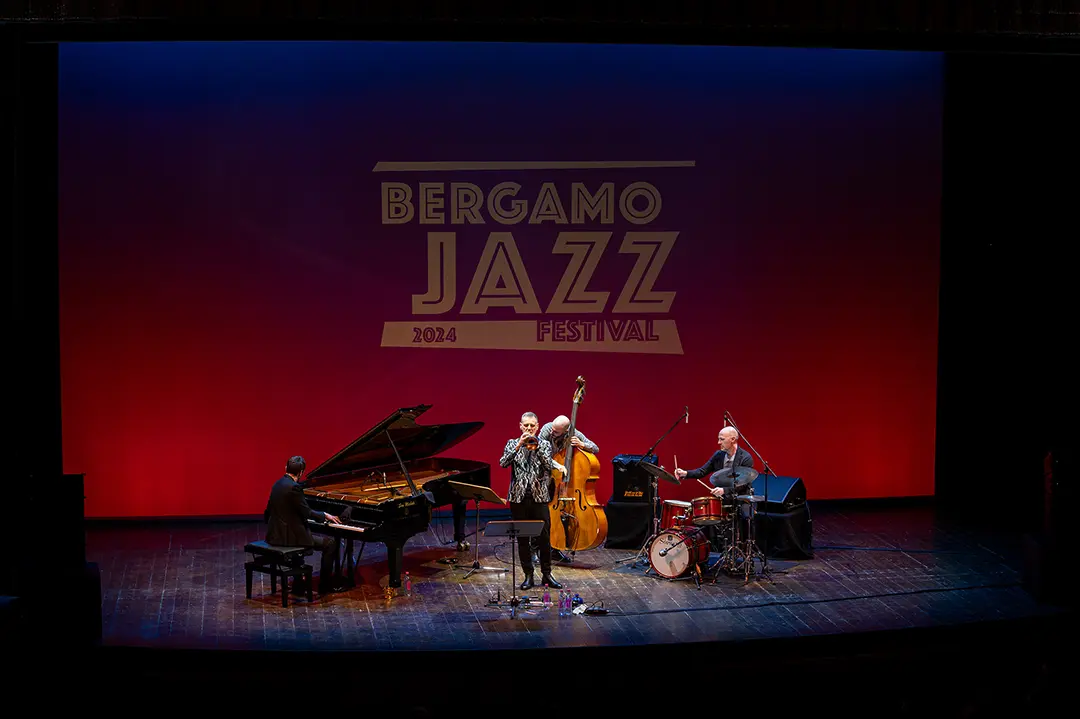
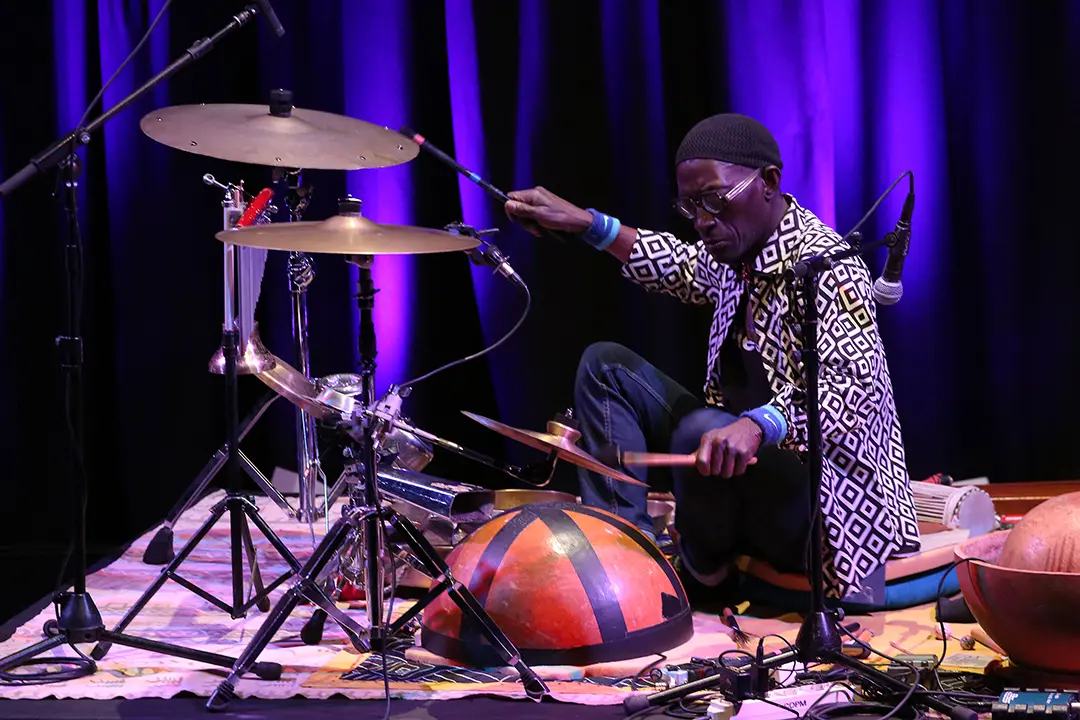
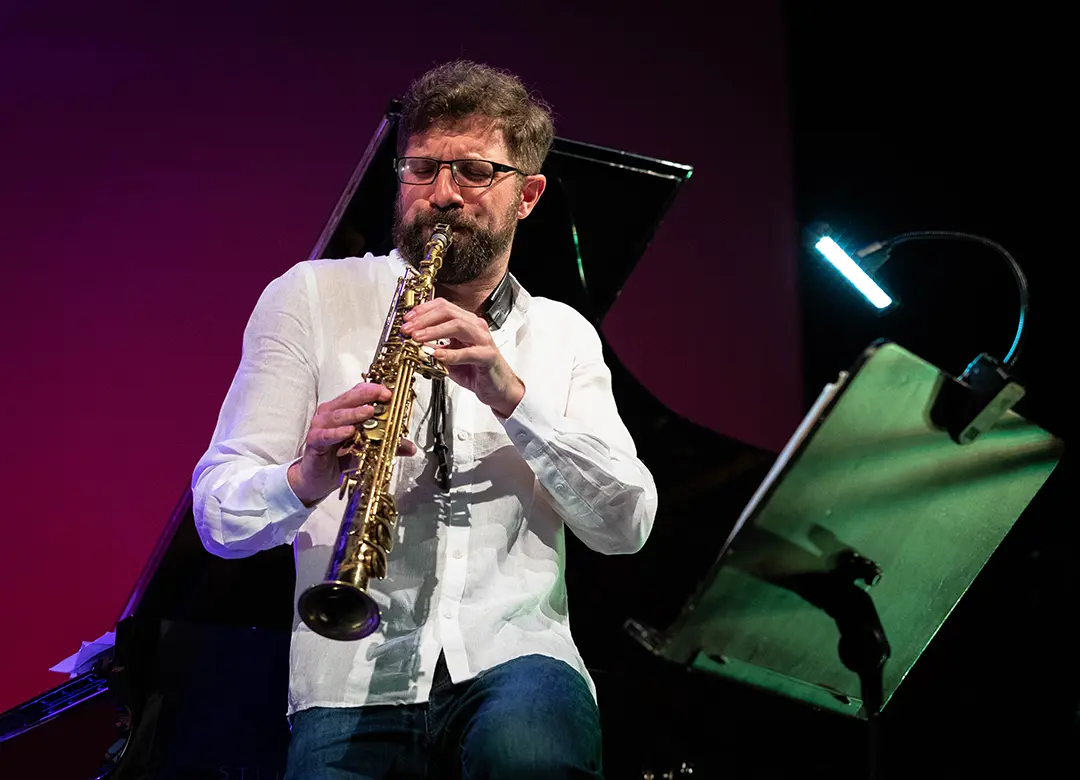
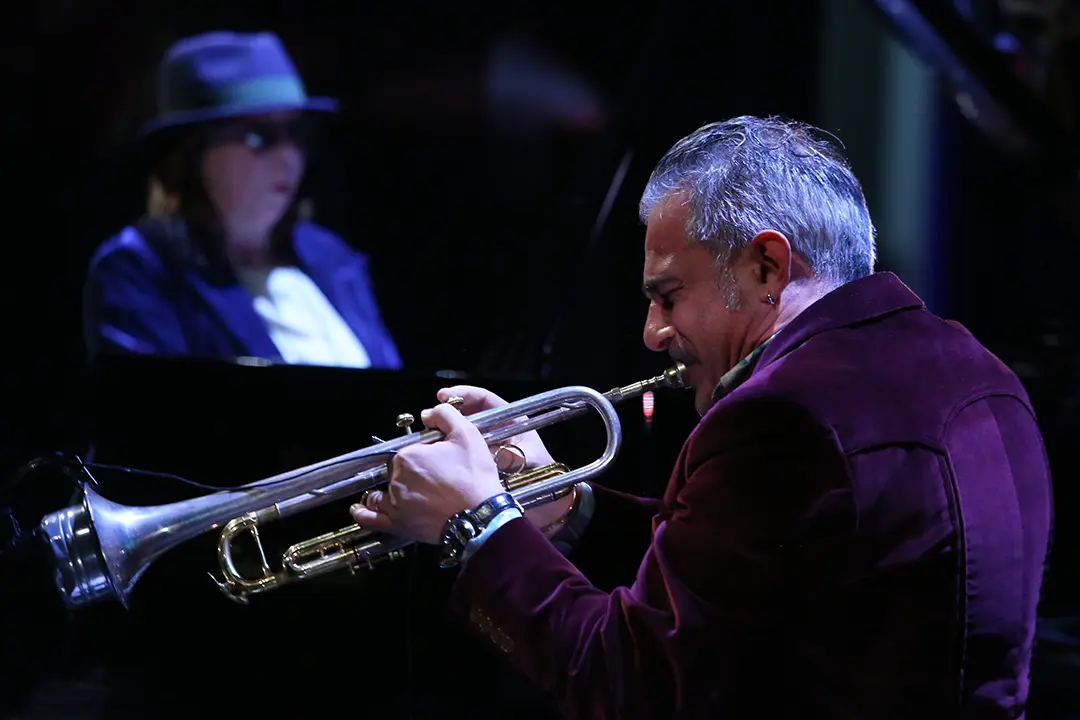
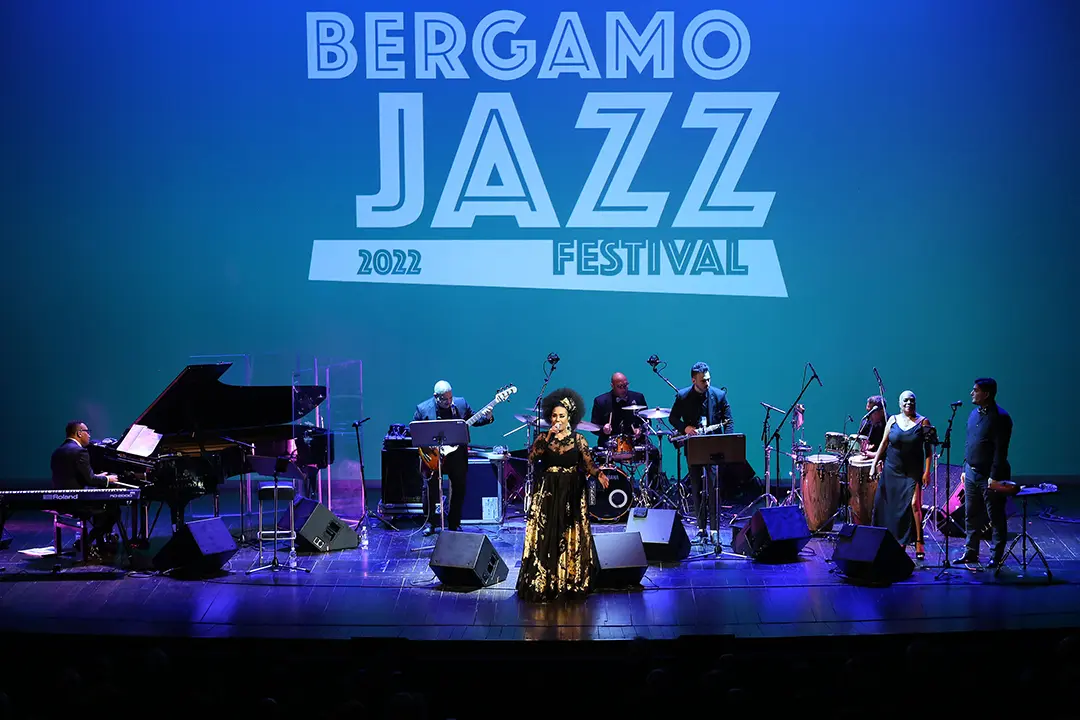
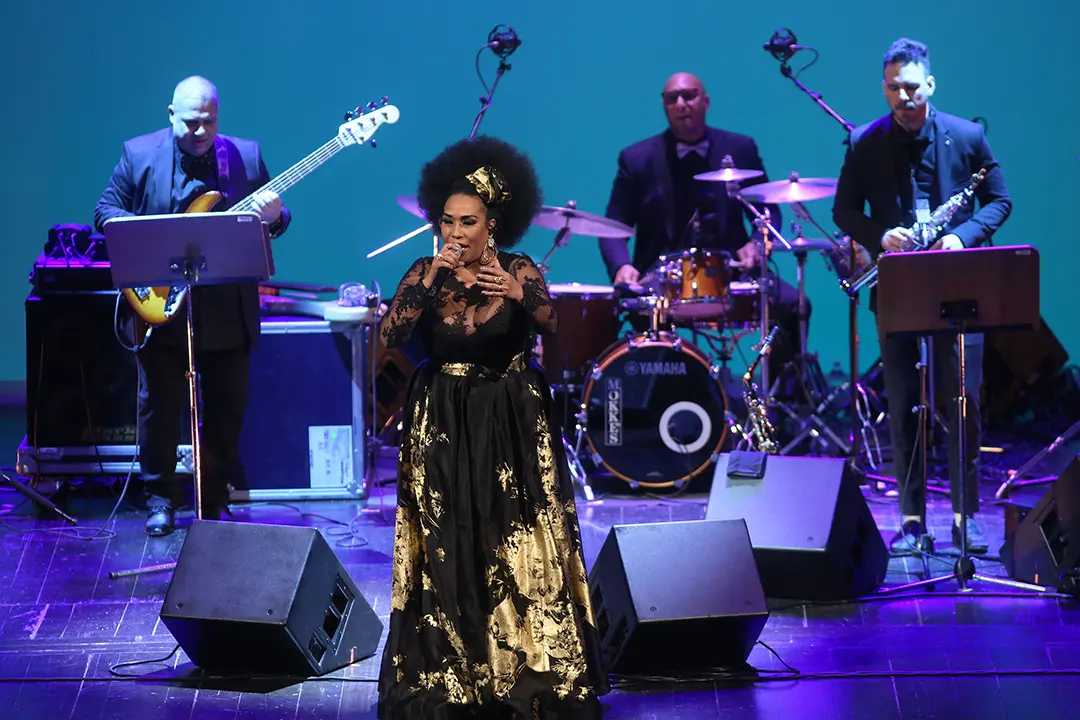
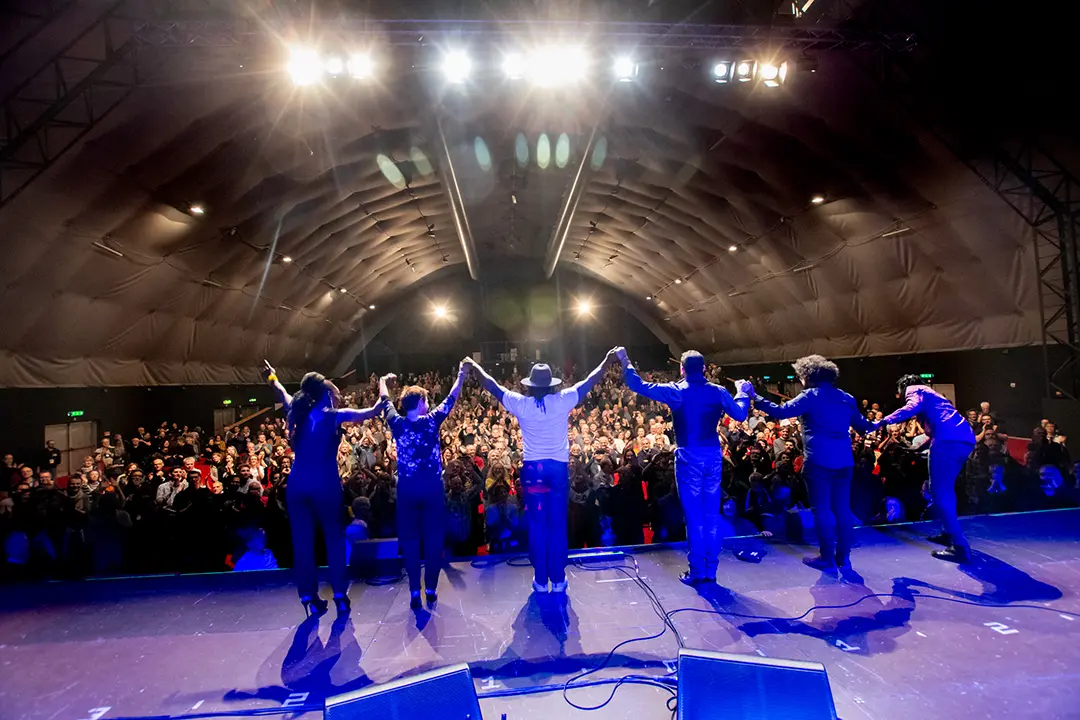
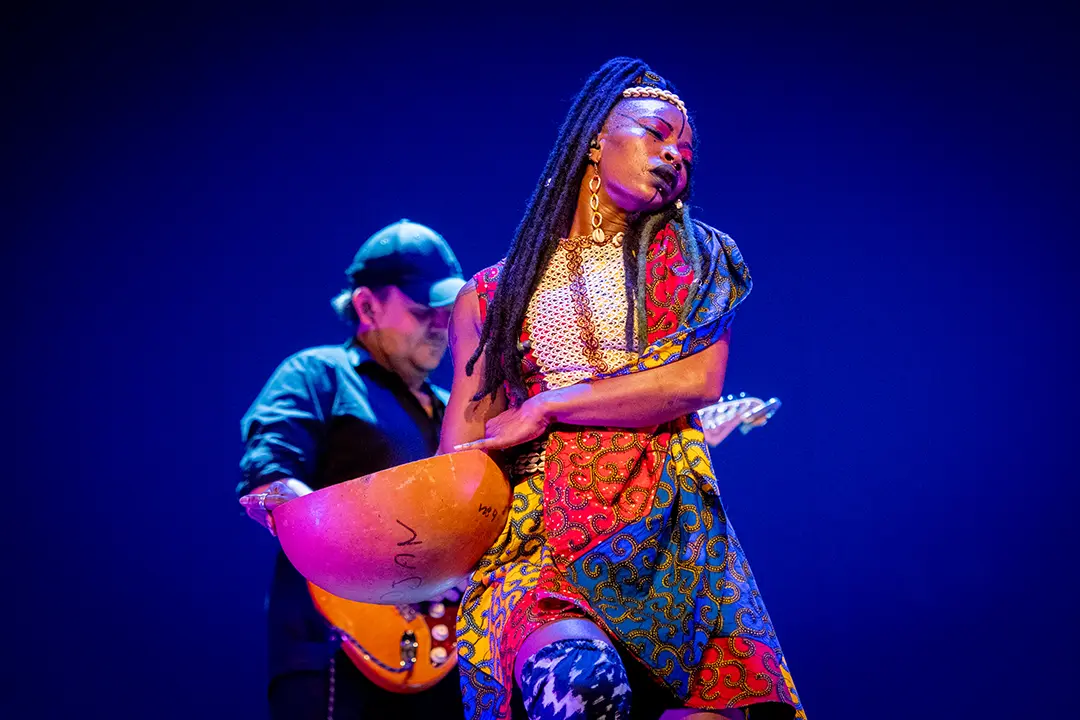
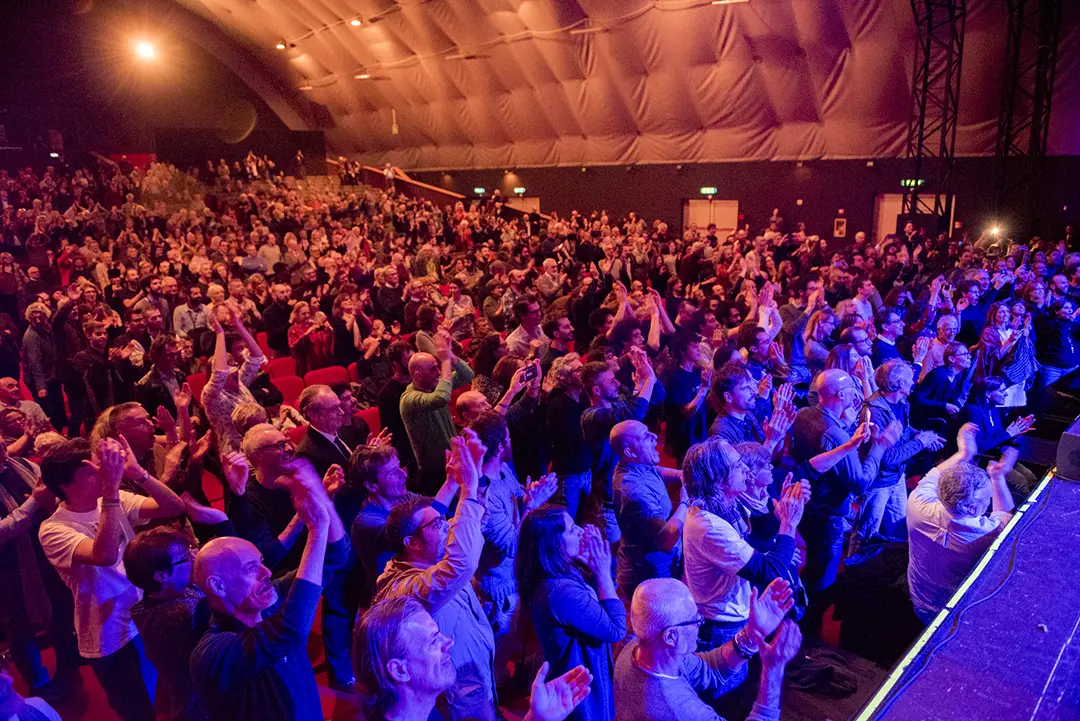
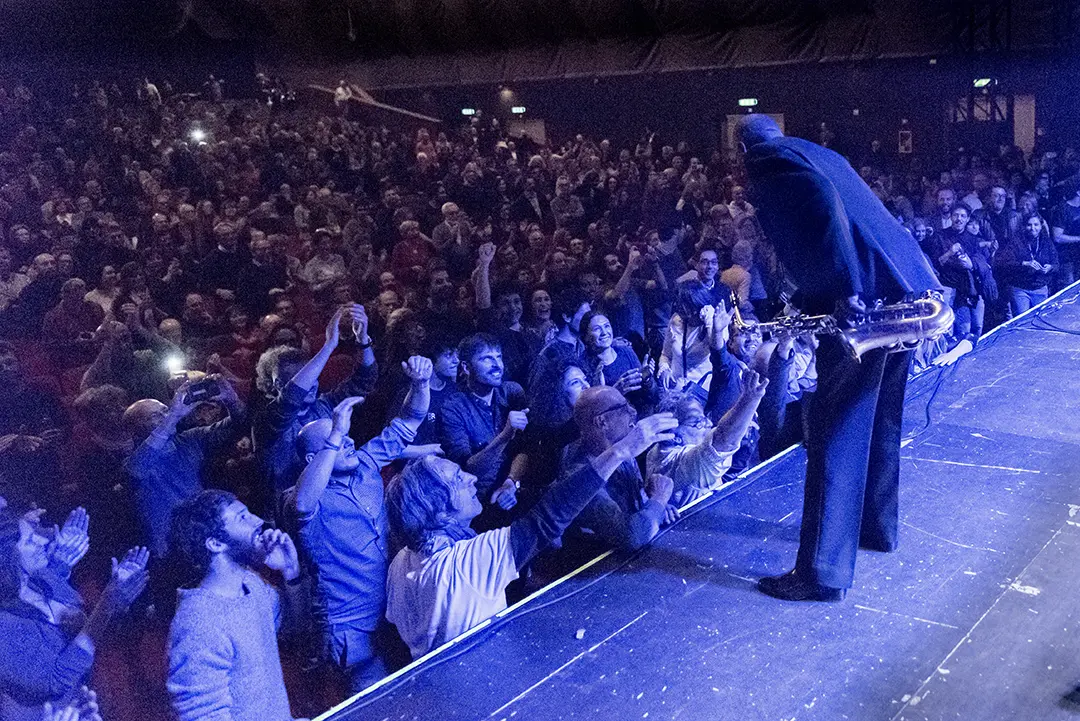
The history of Bergamo’s jazz festival is long and can be divided into two parts: the first from 1969 to the early 1980s under the name of International Jazz Review and the organization of the Azienda Autonoma per il Turismo, the second from 1991 onward under the banner of Bergamo Jazz and the aegis of the City of Bergamo and the Teatro Donizetti (now the Teatro Donizetti Foundation), custodians of the “Bergamo Jazz Festival” brand.
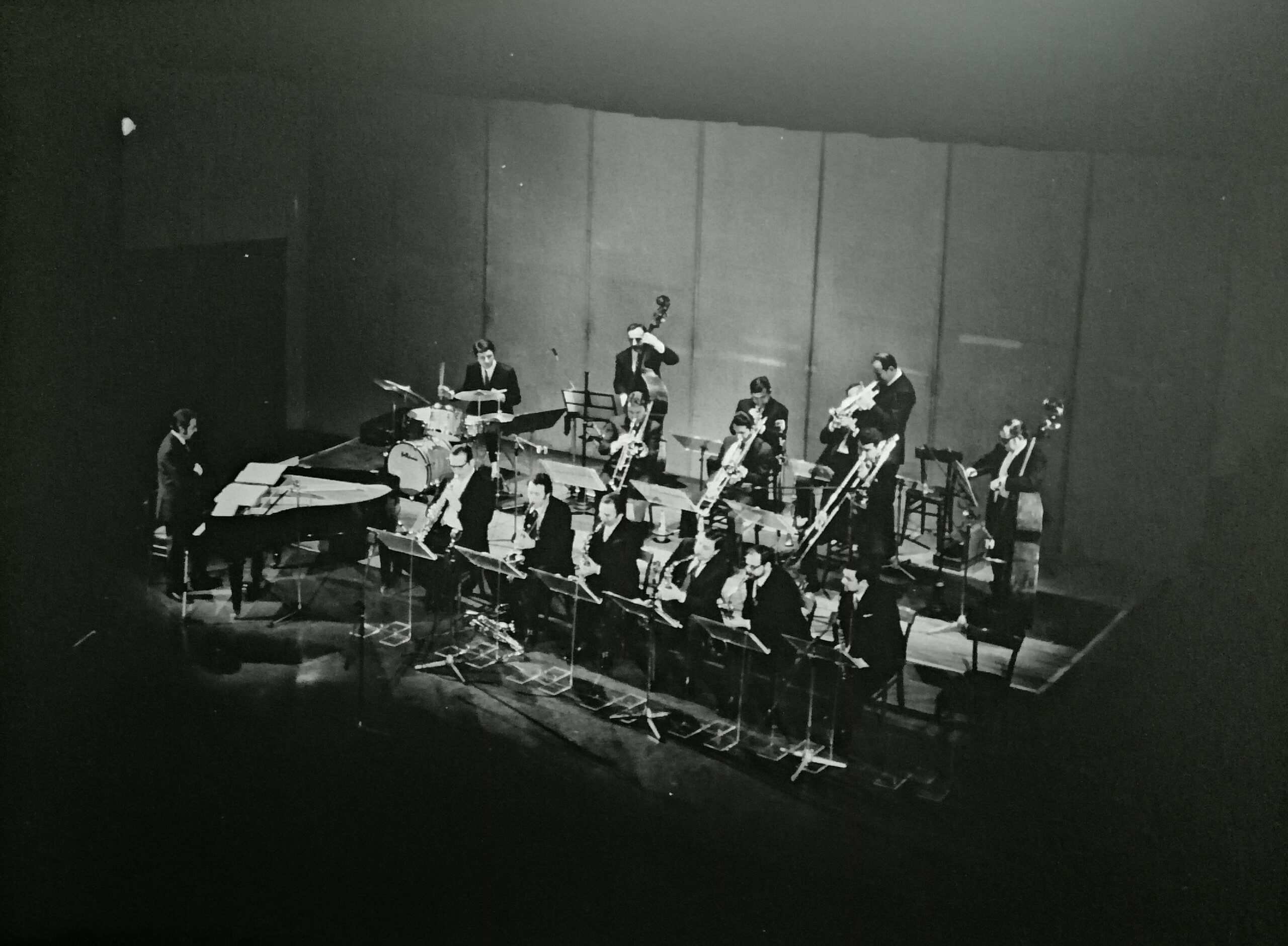
Launched in 1969, the International Jazz Review promoted by the Azienda Autonoma di Turismo debuted at the Donizetti Theater on March 21 with a three-day program, recounted as follows by journalist Franco Fayenz, doyen of Italian jazz criticism: “I remember my arrival in the garden next to the theater, just in time to see Roberto Polillo photographing Cannonball Adderley, half lying on a bench and wrapped in one of those fur coats in vogue at the time: the photo would become famous. Just as well as I remember those three spring evenings when there were few, too few of us in the theater stalls listening to Giorgio Gaslini’s quartet and big band, Maynard Ferguson’s orchestra and Cannonball’s quintet.”
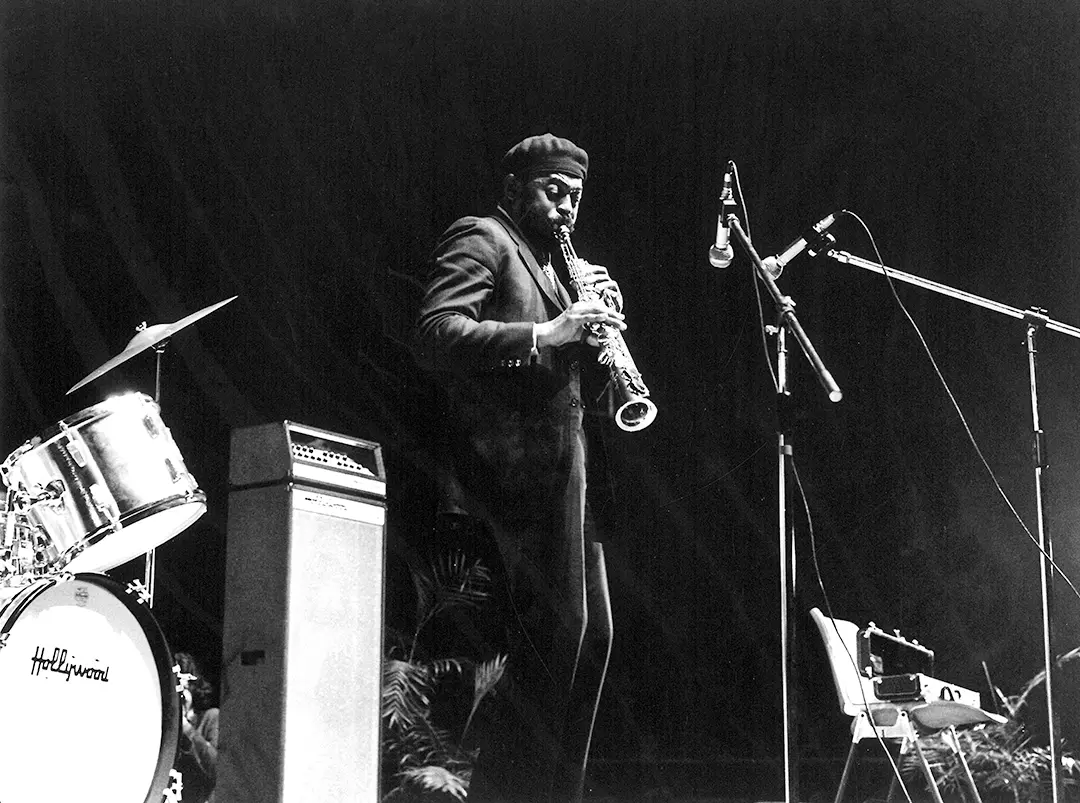
After that bold debut, the festival experienced a growing, unstoppable popularity until 1978, when the then organization, after moving from the Donizetti Theater to the more capacious Palazzetto della Sport, decided to close it down, partly because of the political-social context of the time that was directly or indirectly affecting music events, including the Bergamo jazz festival itself.
Between 1969 and 1978 artists, in addition to those in the first edition, such as
Inexhaustible is the collection of valuable anecdotes and recollections that well represent the review of the early years and, across the board, draw an unusual socio-political portrait. In 1973, the then young pianist Keith Jarrett gave one of his first solo concerts and it was a triumph. Late at night, the pianist reached the Hotel Moderno for a
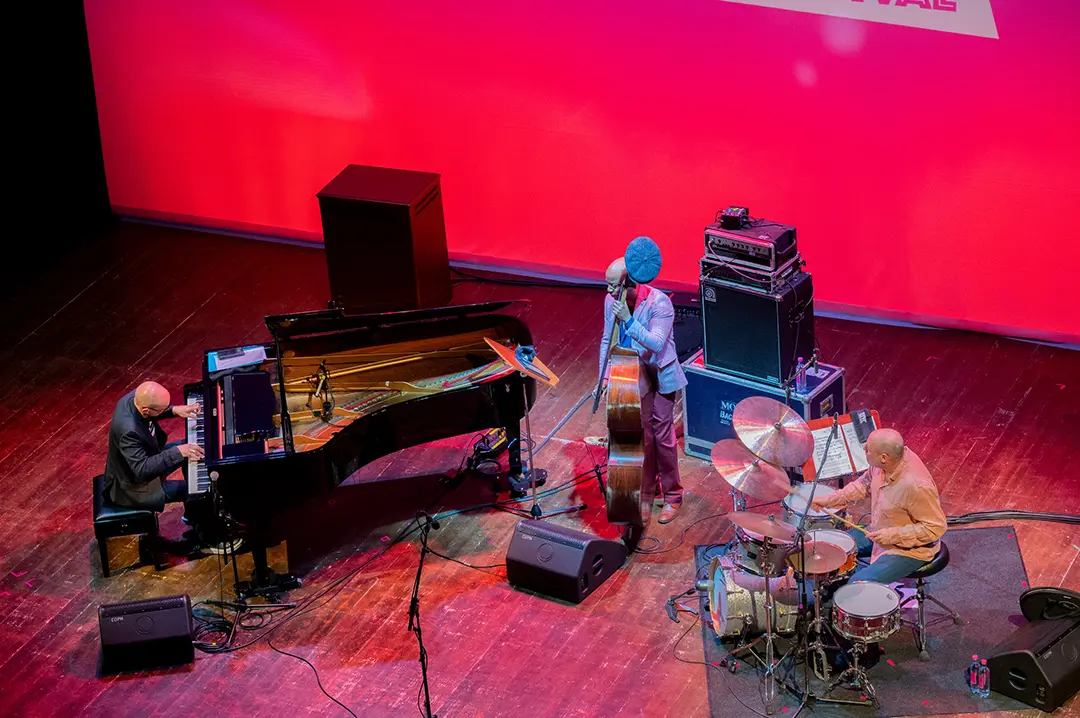
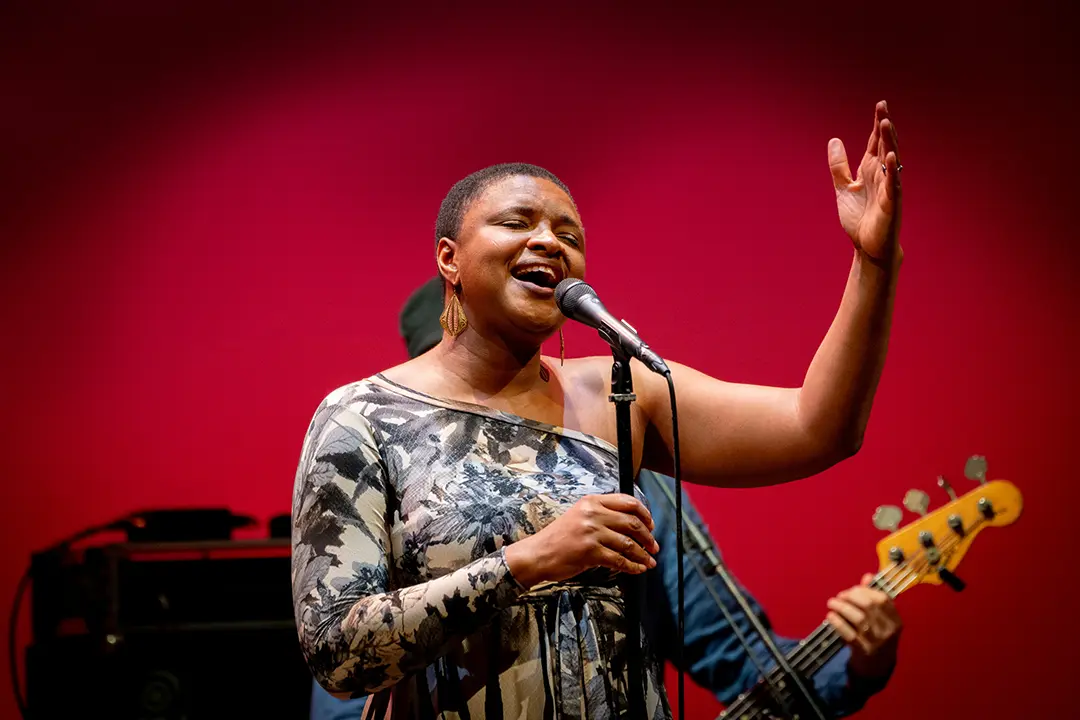
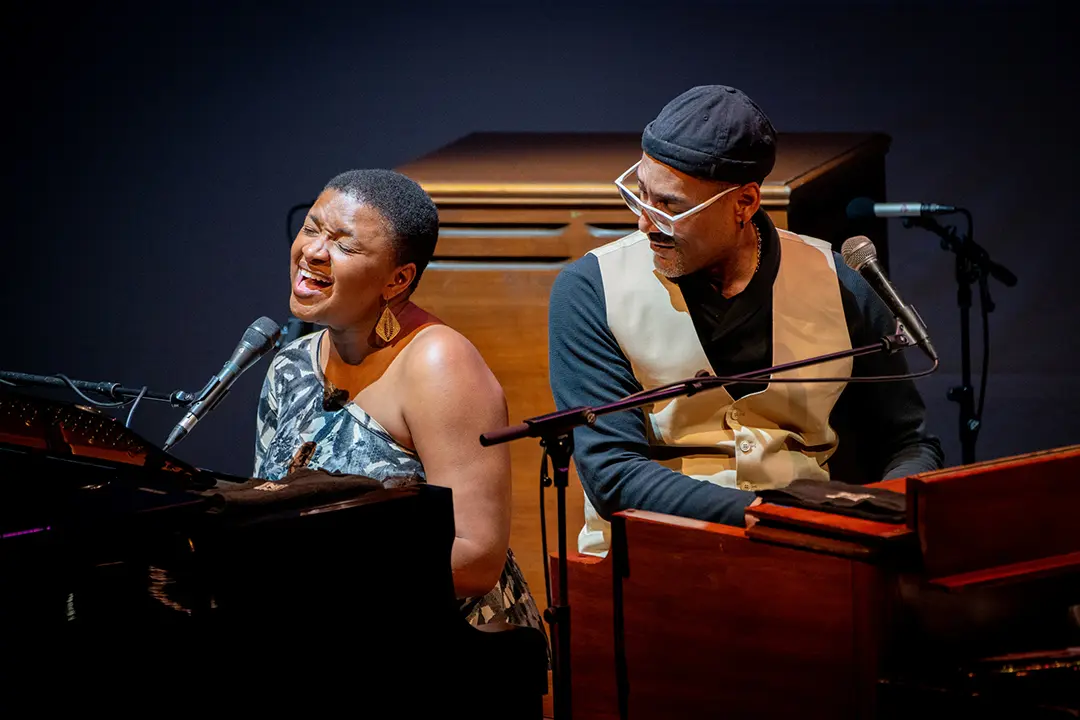
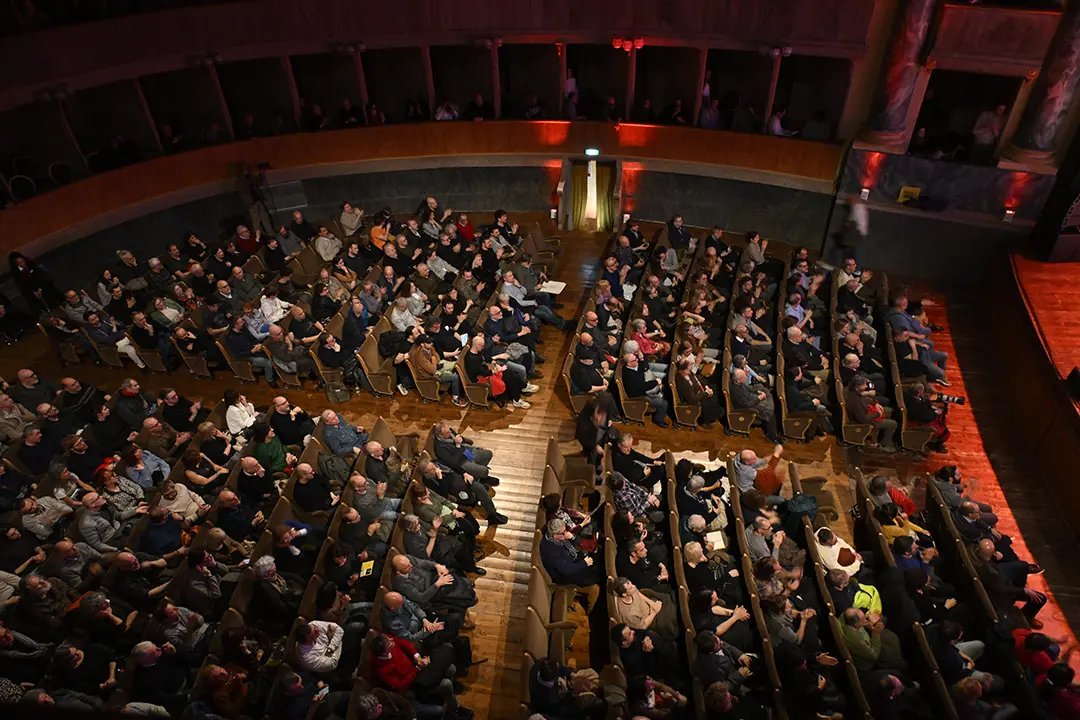
Years later, still Franco Fayenz would write: “The festival literally burst into the hands of the organizers-whose experience and competence, in the meantime, were growing-and the marvelous Donizetti Theater was not enough to contain the ever-growing, and sometimes threatening, audience: ‘political breakouts’ had become fashionable.” Tumultuous years, in which the festival continued to host the protagonists of the international jazz scene: in 1974 the
Having closed the experience of the Palazzetto dello Sport, whose acoustics were certainly not ideal for jazz and for music in general, the Azienda Autonoma per il Turismo reproposed, in a smaller version, the International Jazz Review twice more, in 1982 and 1983, at the Seminary Auditorium, dedicating them respectively to the reworking of a popular Bergamasque melody (with the participation of European improvisers coordinated by Gianluigi Trovesi) and to orchestral jazz (with the RAI Orchestra and several guest soloists).
The International Jazz Review knew how to sow a seed that was harvested in 1991, after a long pause – waiting for tempers to cool – by Bergamo Jazz, run directly by theCulture Department of the City of Bergamo and the Donizetti Theater. Between the “old” and the “new” festival, therefore, there is an ideal, natural, inseparable link: continuity is also evident from an artistic point of view, by virtue of a broad spectrum of propositions, a faithful mirror of the many souls that have always coexisted in the world of jazz.
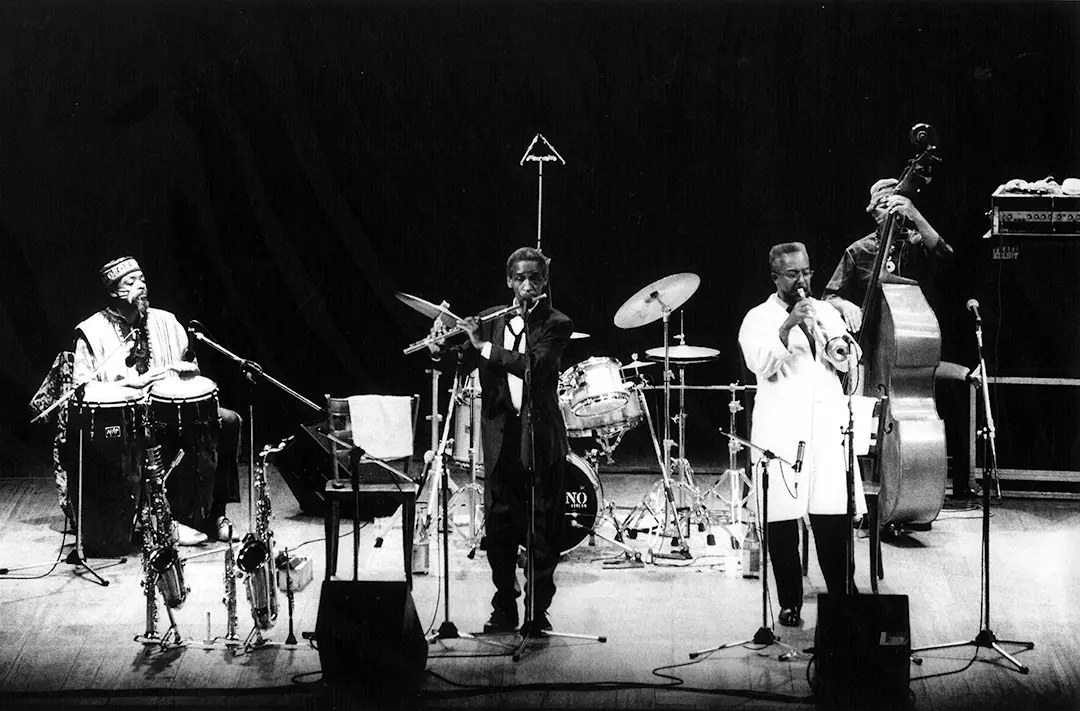
Other important artists then arrived on the stage of the Donizetti Theater, once again the home of the Festival: from Ornette Coleman (in a duo with German pianist Joachim Kuhn) to Michel Petrucciani (who in 1995, during the encore, was the victim of one of the many bone fractures that punctuated his fragile life), from a well-discovered Art Ensemble of Chicago to John Scofield, from Gato Barbieri to
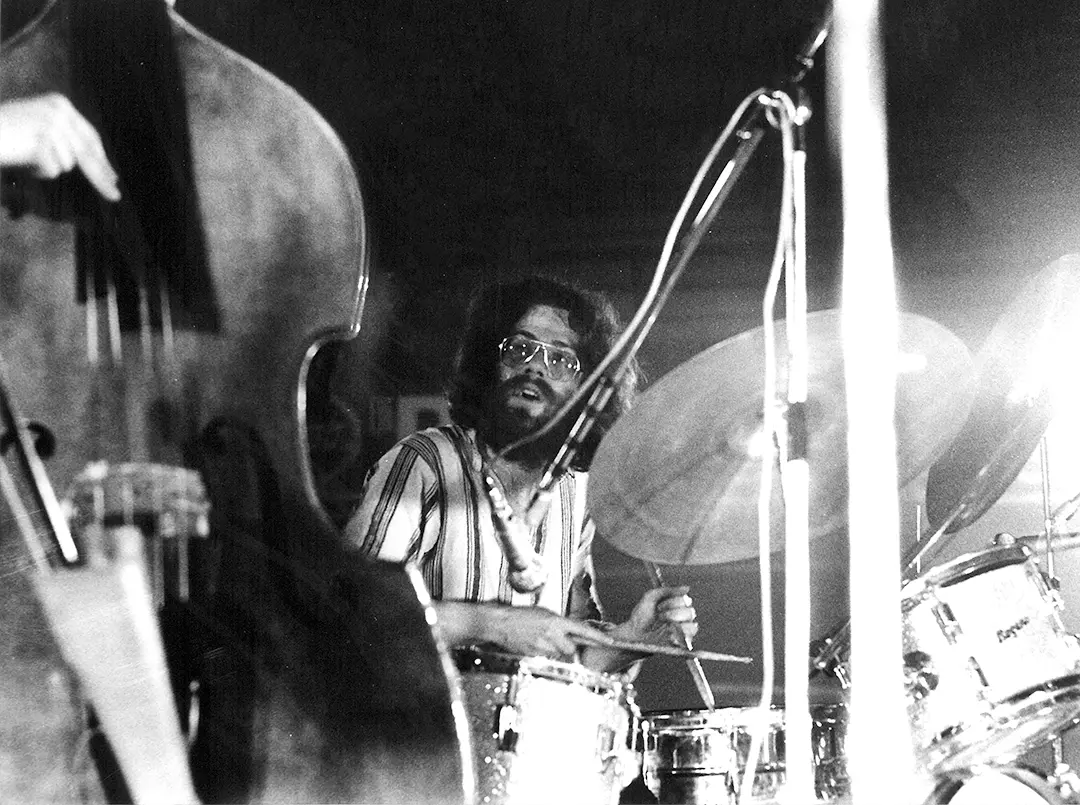
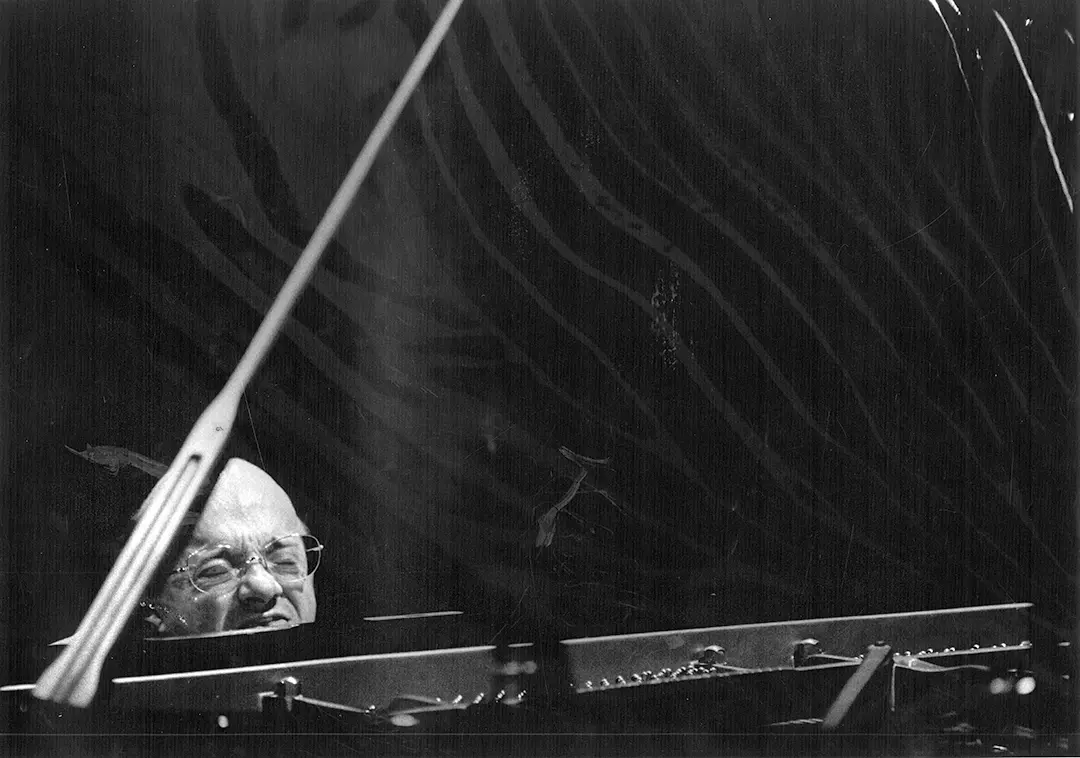
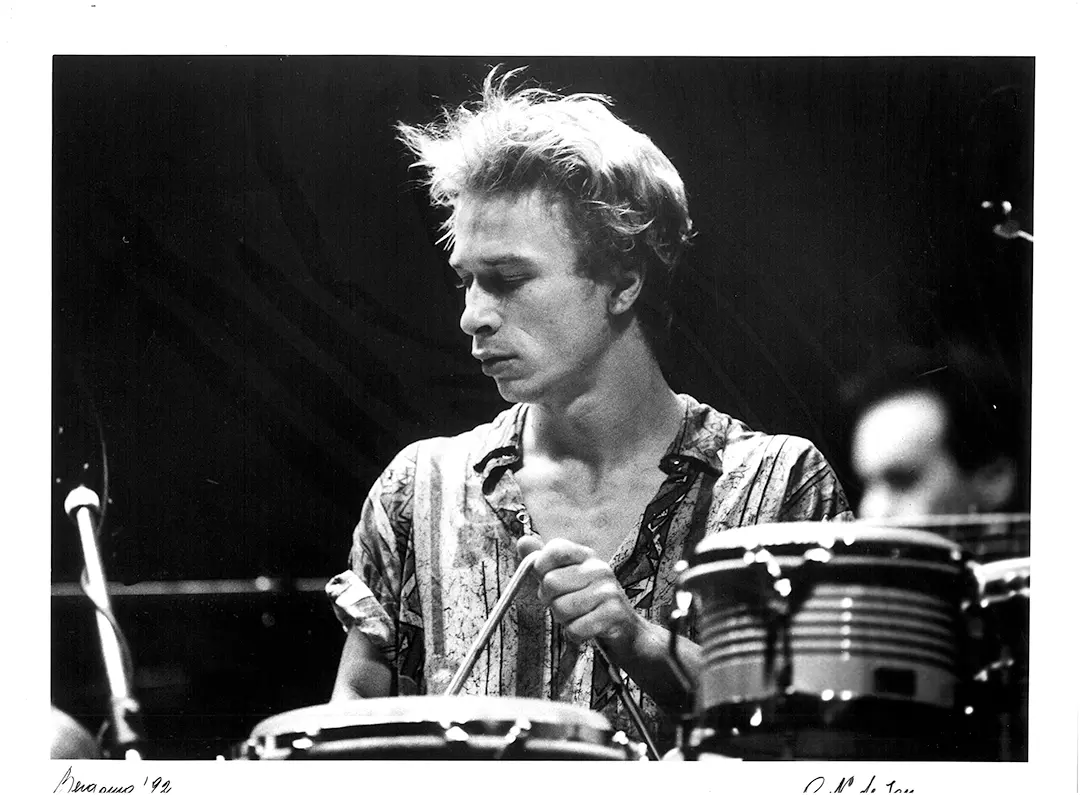
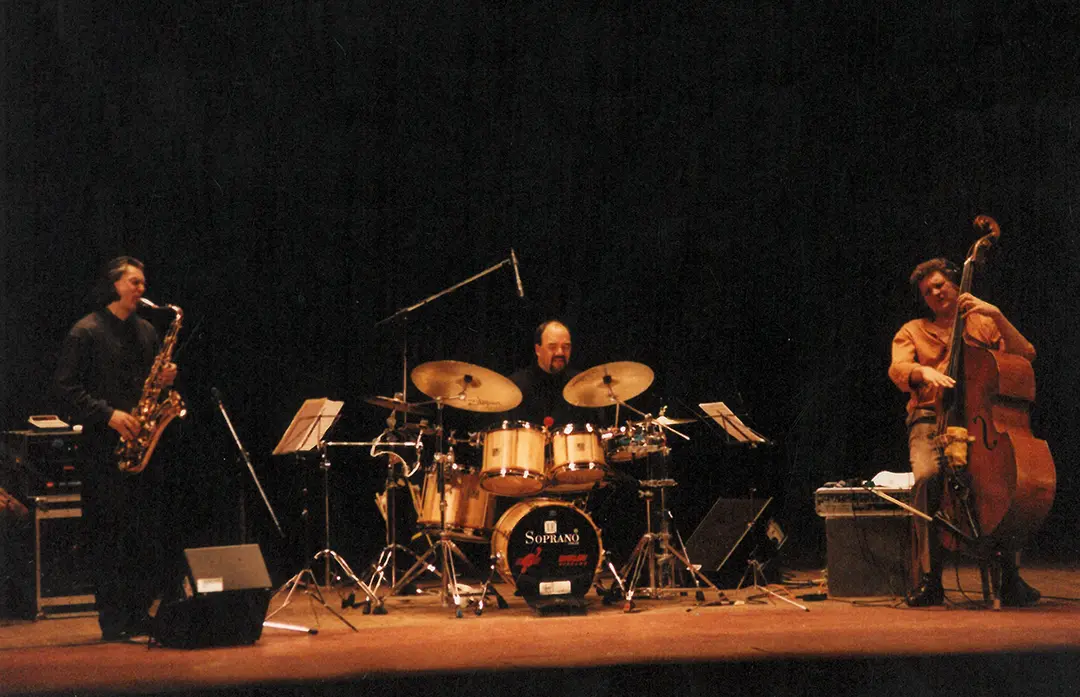
Since 2006, the Artistic Direction of Bergamo Jazz has been programmatically entrusted to a musician of international prominence, with the goal of bringing the event to other venues in the city as well. From 2006 to 2008, U .S. pianist and composer Uri Caine was in charge of this task, turning with particular attention to the U.S. scene by calling on Steve Coleman, Roscoe Mitchell, Butch Morris, and Branford Marsalis, but also opening significantly to Latin jazz: one name above all, that of the Cuban Chucho Valdés.
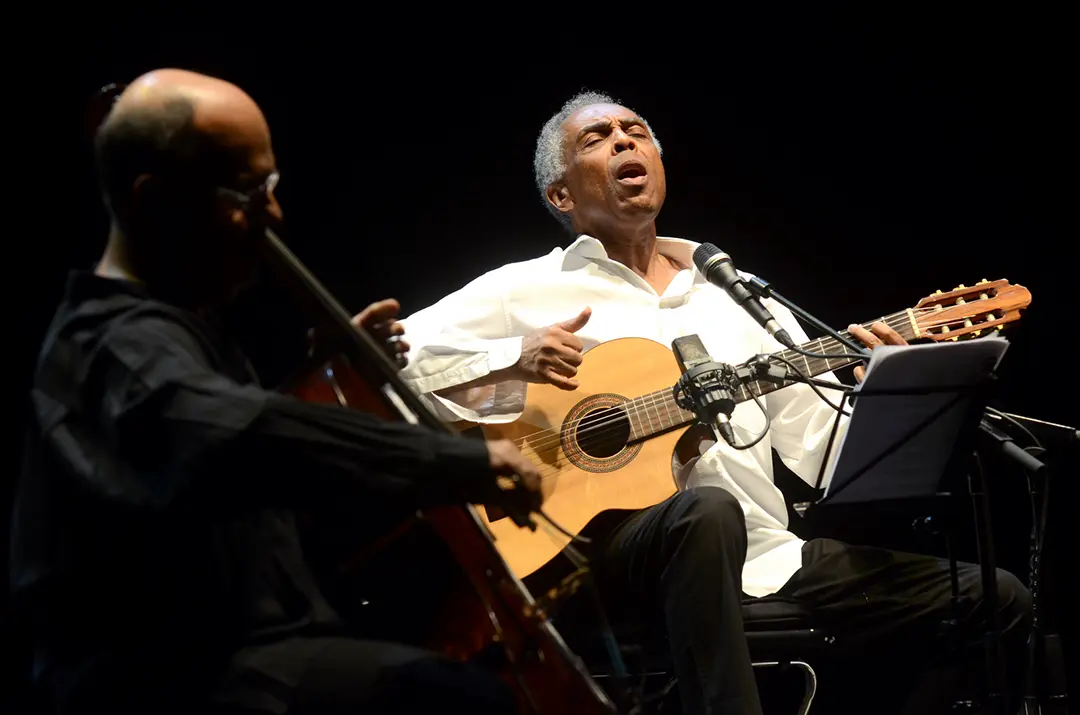
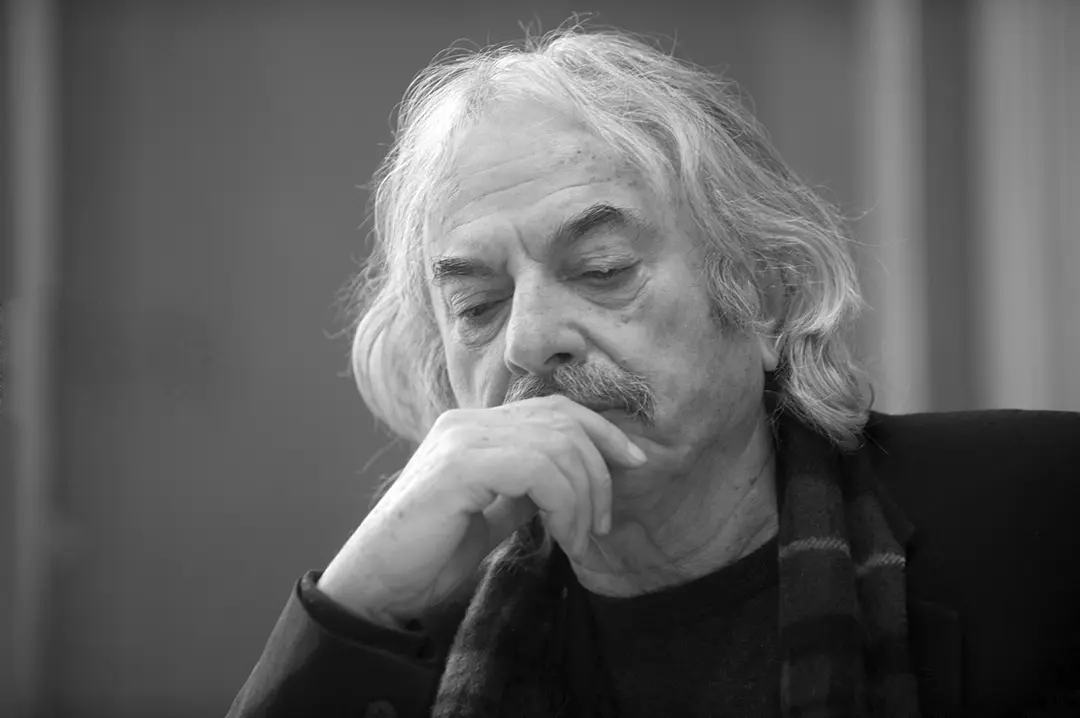
From 2009 to 2011, the artistic direction came under the management of Paolo Fresu, and the spotlight shifted predominantly to Old World jazz, but without neglecting historic names such as Ahmad Jamal. Fresu has prepared cross-cultural programs with guests such as Gilberto Gil, one of the masters of Brazilian music, and a pair of true stylists such as pianist Chick Corea and vibraphonist Gary Burton; with long-distance encounters between the volcanic talent of Stefano Bollani and the flair of Frank Zappa, and between the modern sensibility of pianist Enrico Pieranunzi and the genius of the greatest Baroque harpsichordist, Domenico Scarlatti; with the funk of Swedish trombonist Nils Landgren and the refined musicality of a master of European jazz, Polish trumpeter Tomasz Stańko.
Fresu was then followed by Enrico Rava, in a line of substantial continuity that from 2012 to 2015 featured great musicians backed by international critical acclaim: piano masters such as Brad Mehldau, Jason Moran and Craig Taborn, trumpet masters such as the still young but already experienced Ambrose Akinmusire, and saxophone masters such as Tim Berne, a leading player on the New York scene since the early 1980s. They also include a revelation like the trio The Bad Plus, pianist and composer Myra Melford and one of the most lucid minds in Italian jazz, Stefano Battaglia.
Dave Douglas’ latest artistic direction began in 2016. The program of Douglas’ first edition wanted to declare right from the start how jazz is a living music, made by a multiplicity of voices expressing a continuous evolution: pianists Geri Allen and Kenny Barron, both of rare expressive elegance; virtuoso Israeli clarinetist Anat Cohen and one of the standard-bearers of South African jazz, drummer Louis Moholo-Moholo; the explosive Scandinavians Atomic and young drummer Mark Guiliana, chosen by David Bowie for his latest album, “Blackstar.” For the 2017 edition of Bergamo Jazz, Dave Douglas himself introduced several novelties, first of all “Scintille di jazz,” a review dedicated to new talents, the curation of which the American musician wanted to entrust to Bergamo saxophonist Tino Tracanna, who has long been the coordinator of jazz courses at the “G. Verdi” Conservatory in Milan, as well as the holder of a jazz course at the Bergamo Conservatory. This festival, which has successfully hosted young jazz musicians from the Lombard area, including those from Bergamo, was held at various venues in Città Bassa and Città Alta. As well as other events of the Festival, held for the first time also at the Accademia Carrara and the Angelo Mai Library, two symbols of the culture of the City of Bergamo. In addition to the Donizetti Theater, concerts were held, as has become customary, at the Teatro Sociale and the Auditorium in Piazza della Libertà. Among others, the Bill Frisell-Kenny Wollesen duo, violinist Regina Carter, pianist Enrico Pieranunzi with the Brussels Jazz Orxchestra, and the groups of William Parker, Francesco Bearzatti and Marilyn Mazur were heard. Full success was also garnered by solo performances by Evan Parker and Ernst Rejseger. The year 2018 was the 40th for the festival: for such a special anniversary, the Donizetti Theater Foundation and American musician Dave Douglas, in his third tenure as Artistic Director of one of the most beloved musical events not only among Bergamascans, therefore set up an articulate and varied program, to the realization of which many institutions and associations active in the cultural and business spheres contributed. Two events were specifically conceived: the last of the concerts at the Creberg Teatro, which exceptionally featured side by side the four Artistic Directors of Bergamo Jazz from 2006 onward – in order Uri Caine, Paolo Fresu, Enrico Rava, Dave Douglas -, and a photographic exhibition that brought to life salient moments of the Festival. In the last year of his Artistic Direction, Dave Douglas then devoted a focus to African music, offering concerts by historic Cameroon saxophonist Manu Dibango and Ivorian vocalist Dobet Gnahoré.
On the last evening of the 2019 edition of Bergamo jazz, Dave Douglas himself introduced his successor to the audience: singer Maria Pia De Vito. In addition to her extensive and prestigious artistic curriculum, Maria Pia De Vito was chosen by the Fondazione Teatro Donizetti for her work from 2016 to 2018 as a consultant to the jazz section of the Ravello Festival, one of the most important classical music festivals worldwide. Having canceled the 2020 edition due to the onset of the Covid 19 pandemic, Bergamo Jazz launched a series of streaming initiatives in support of the Papa Giovanni XXIII Hospital, including a concert by Israeli singer Noa broadcast on international social channels and also on RAI 1. Concert activity then resumed in the summer of 2020 and then in June 2021 with a number of events related to the reopening of the Donizetti Theater and then with the exceptionally repositioned September edition of the festival. The latter featured, among others, Tigran Hamasyan, the quintet of Dave Douglas and Franco D’Andrea, Marcin Wasilewski’s trio, and the Lydian Sound Orchestra conducted by Riccardo Brazzale, with David Murray and Hamid Drake as guests.
Maria Pia De Vito’s artistic direction continued in 2022 and 2023, years in which the festival further consolidated its presence in the city, involving new locations such as Teatro Sant’Andrea and Sala Piatti, both in Città Alta.
Guests at Teatro Donizetti in 2022 included pianist Fred Hersch’s trio with special guest Enrico Rava, Jeff Ballard’s “Fairgrounds,” Brad Mehldau in piano solo, vocalist Michael Mayo, and Cuban pianist Gonzalo Rubalcaba with compatriot singer Aymée Nuviola. The Teatro Sociale, meanwhile, featured the trio of pianist Vijay Iyer, the quartet of Roman drummer Roberto Gatto and the “Giornale Di Bordo” quartet with Antonello Salis, Gavino Murgia, Paolo Angeli and Hamid Drake. Concerts scheduled in other venues in the city featured Greek pianist Tania Giannouli, Jakob Bro/Arve Henriksen/Jorge Rossy Trio, U.S. guitarist Ava Mendoza, Régis Huby Quintet, Gabriele Mitelli-Rob Mazurek Star Splitter Duo, and Trio Correnteza. Also in 2022, Bergamo Jazz officially began celebrating International Jazz Day, sponsored by UNESCO, with a concert by the group “NRG Bridges” composed of Gianluigi Trovesi, Andrea Ferrari and Adalberto Ferrari, organized in Ponte Nossa in collaboration with UniAcque, the company that manages the water service in Bergamo and province and one of the main partners of the Fondazione Teatro Donizetti.
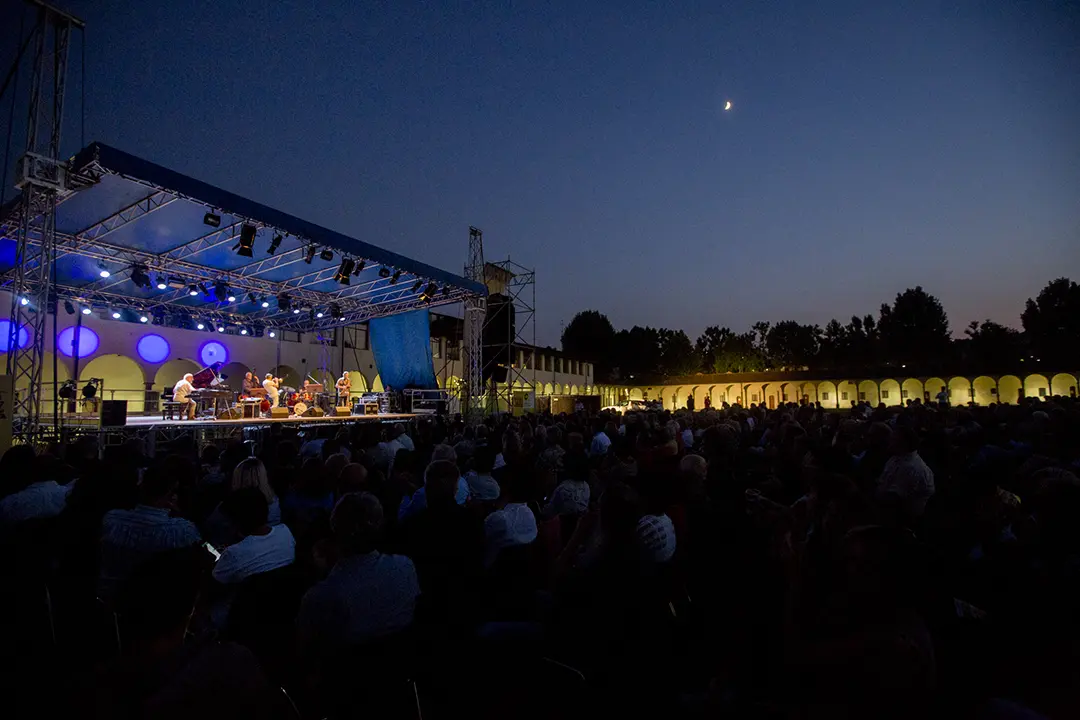
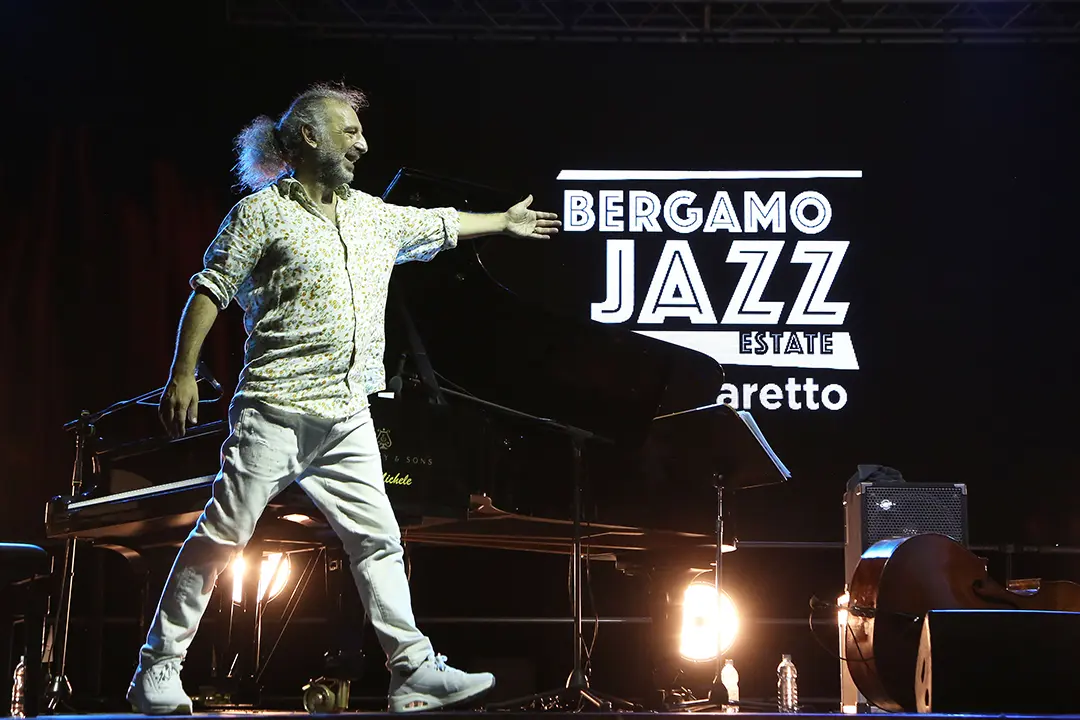
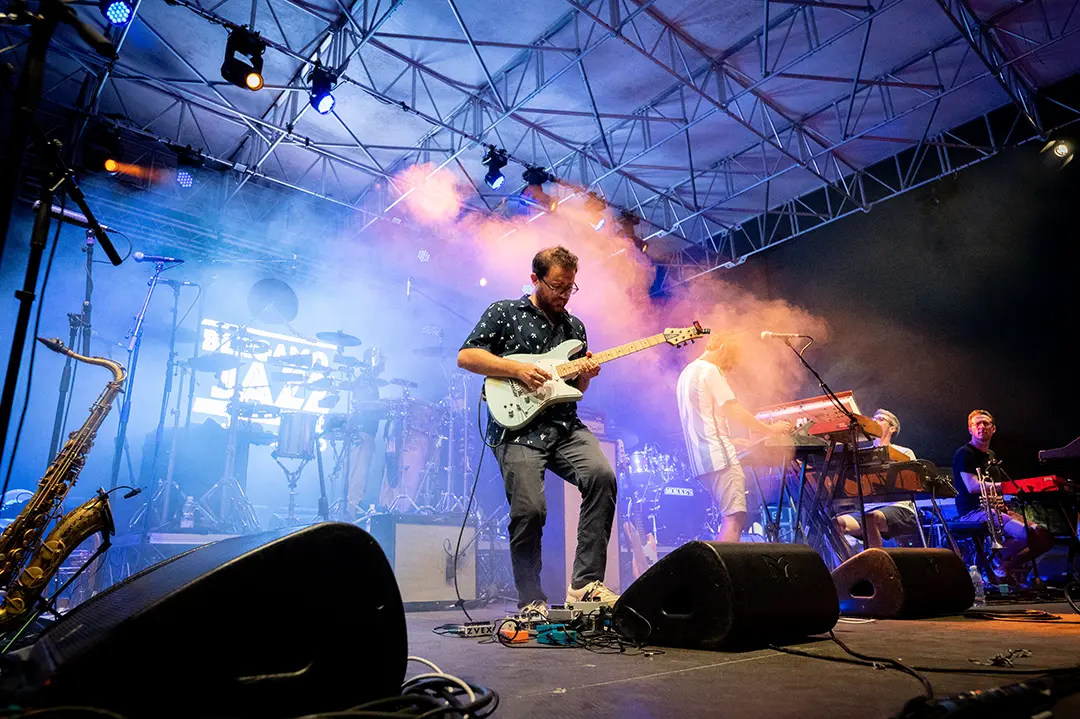
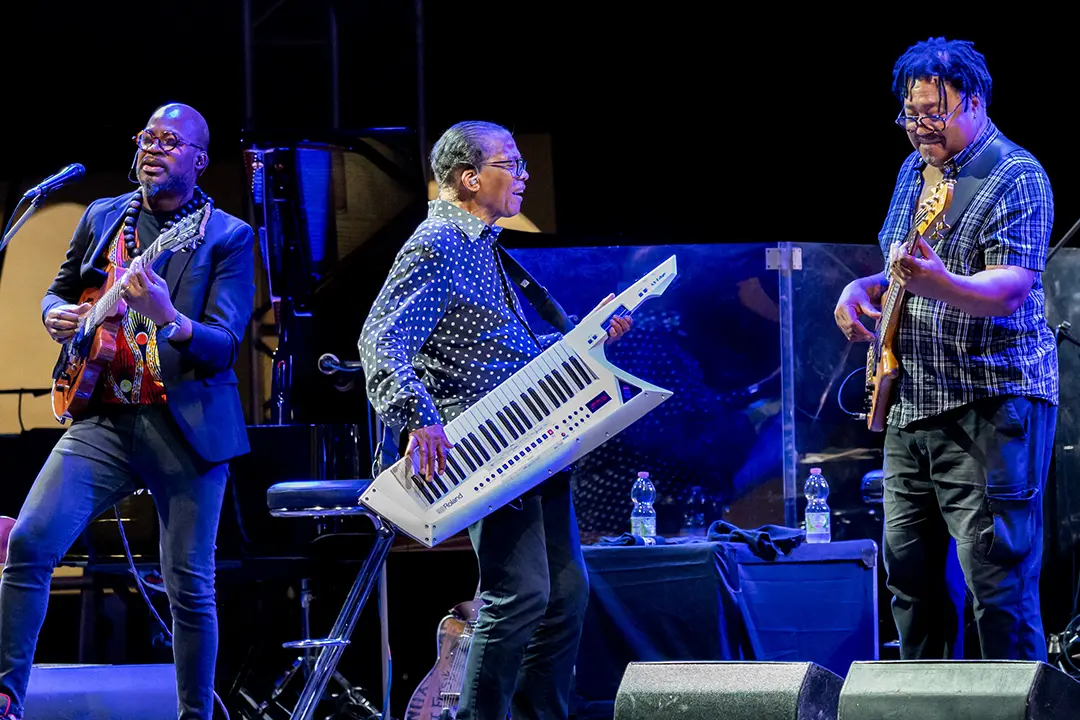
In 2023, the year of “Bergamo Brescia Italian Capital of Culture,” Bergamo Jazz came up with a special project called Panorchestra, an orchestra of young talents conducted by Tino Tracanna, which also later performed at the Teatro Grande in Brescia. Bergamo Jazz 2023 hosted: Amaro Freitas in solo piano, David Linx with Leonardo Montana, Nik Bärtsch also in solo piano, the Oliphantre group composed of Francesco Diodati, Leïla Martial and Stefano Tamborrino, Dan Kinzelman, Django Bates, the trio composed of Ernst Reijseger, Harmen Fraanje and Mola Sylla, Simone Graziano, Rosa Brunello and Camilla Battaglia as a duo, the Mixmonks (Joey Baron, Bram De Looze, Robin Verheyen), Paolo Fresu together with Rita Marcotulli, Cécile Mclorin Salvant, Lakecia Benjamin with the project “Phoenix,” Hamid Drake with the project “Turiya: Honoring Alice Coltrane,” with special guest Shabaka Hutchings, Richard Galliano with his “New York Tango” Trio, Richard Bona, Francesco Chiapperini. The summer of the same year saw three concerts at Lazzaretto with Stefano Bollani, Snarky Puppy and Pat Metheny.
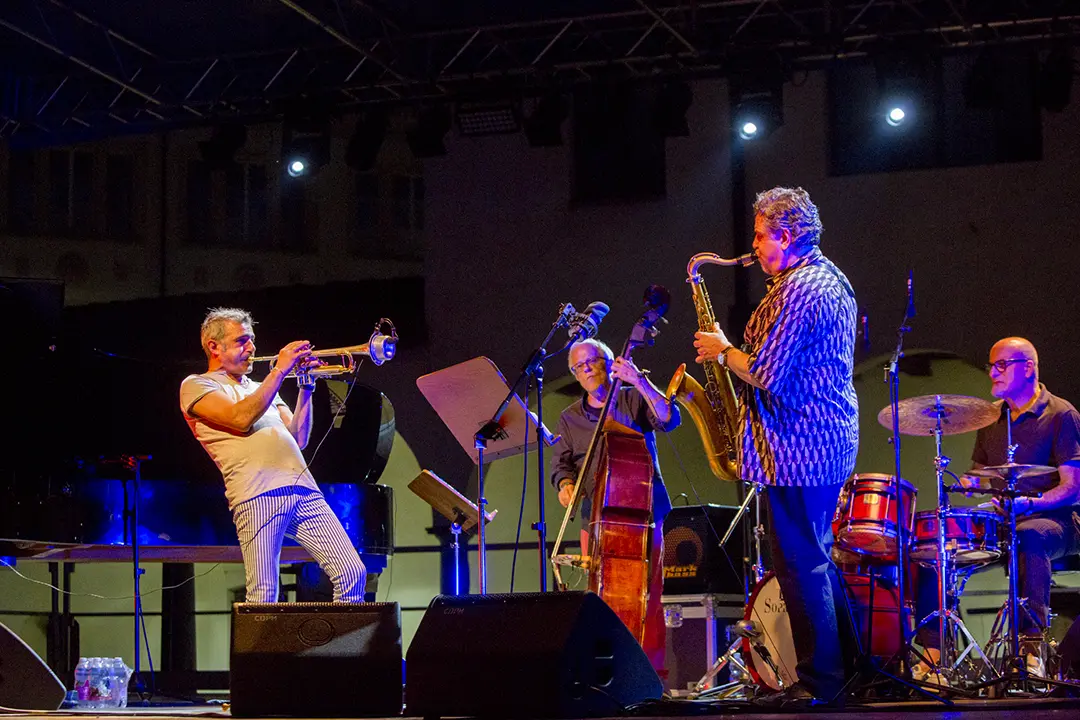
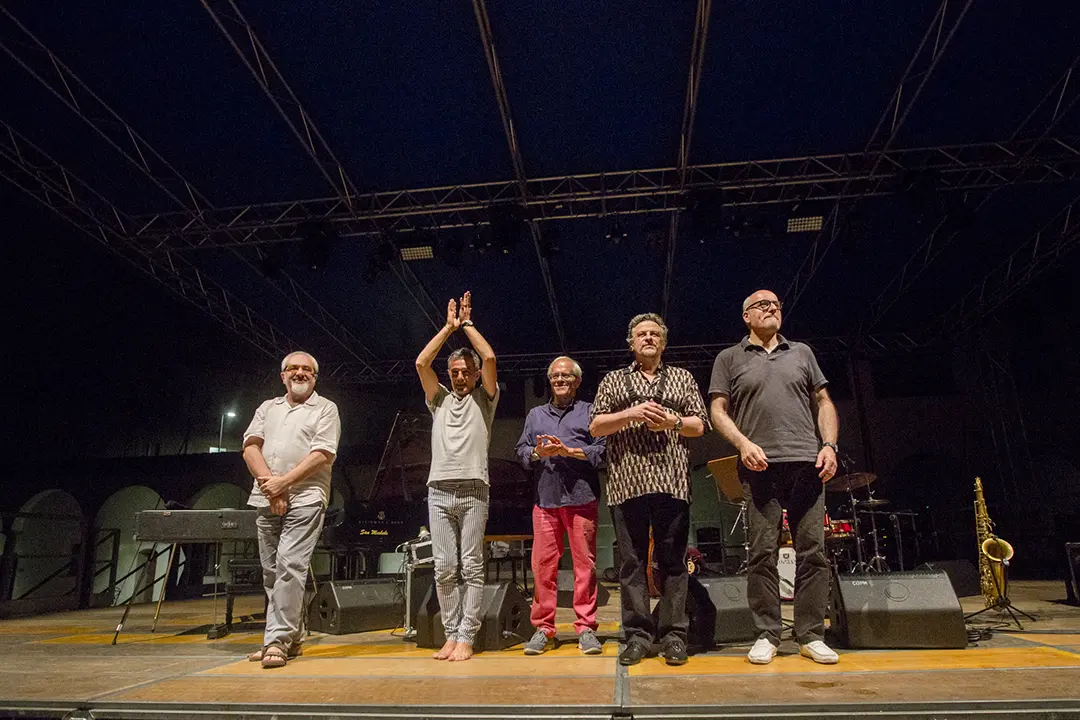
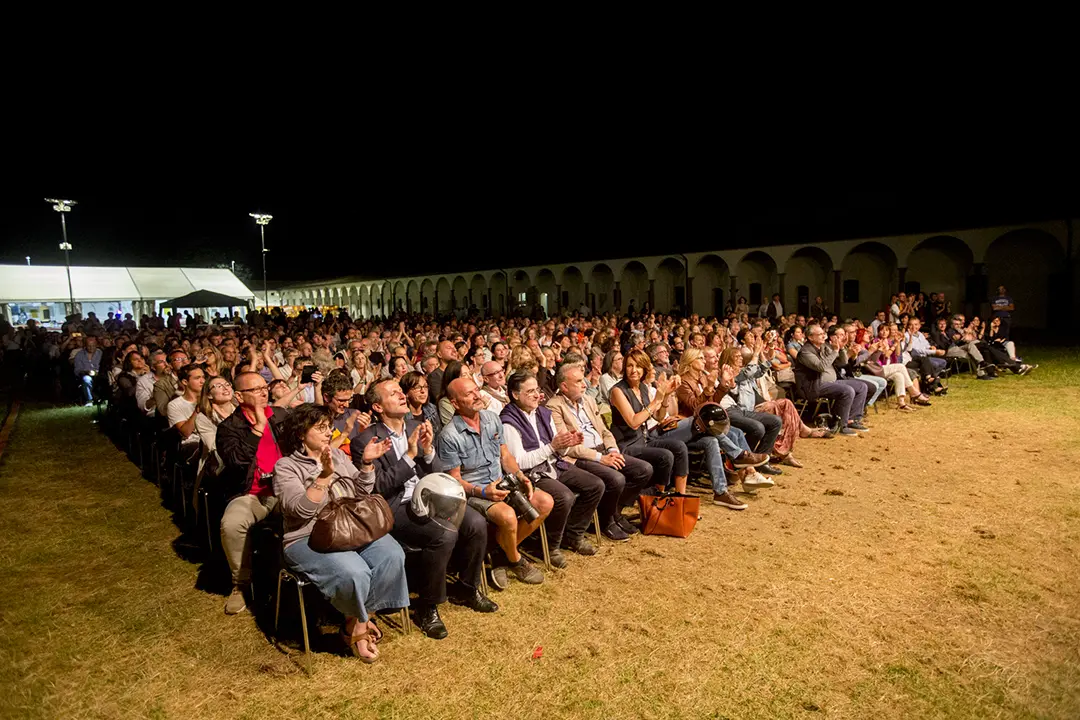
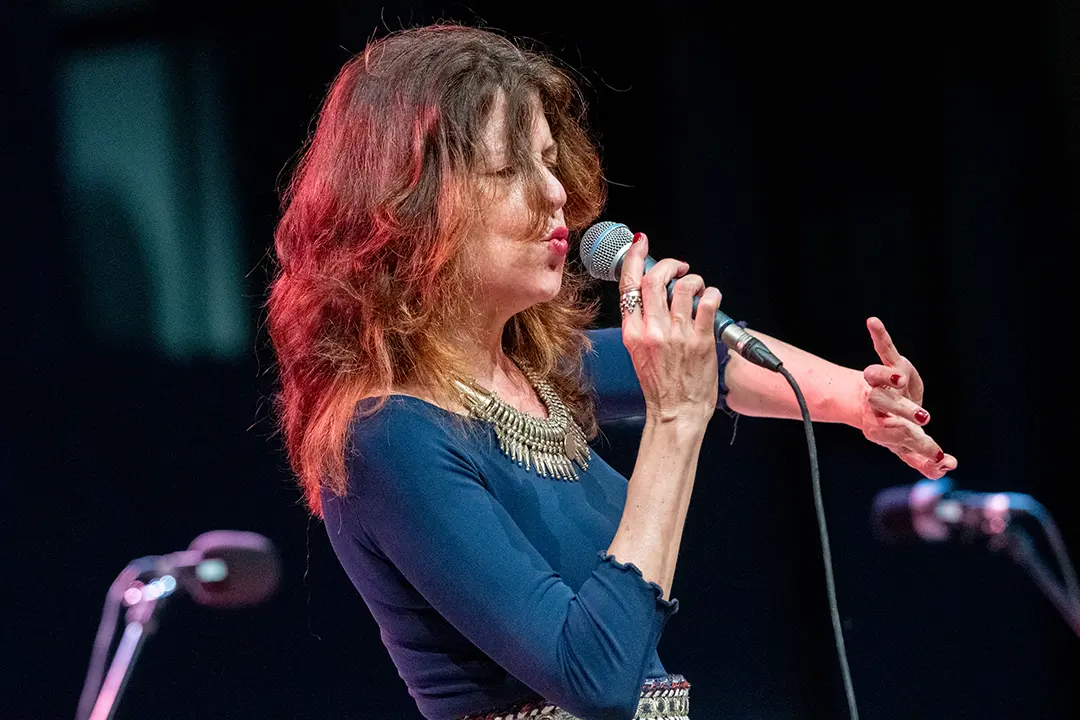
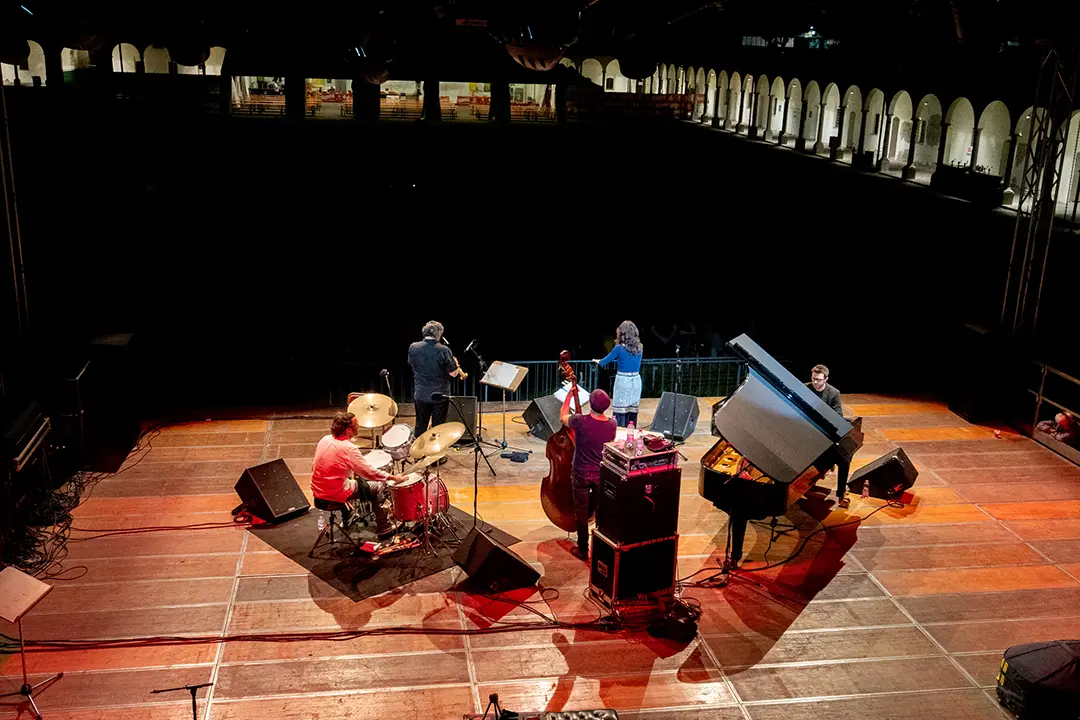
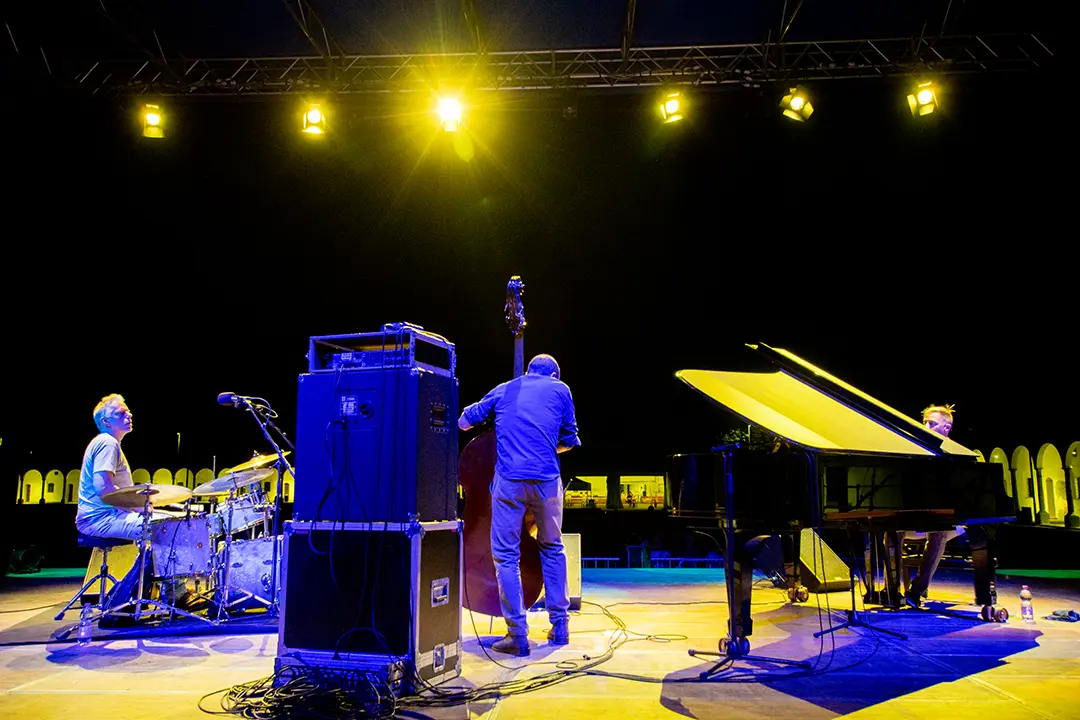
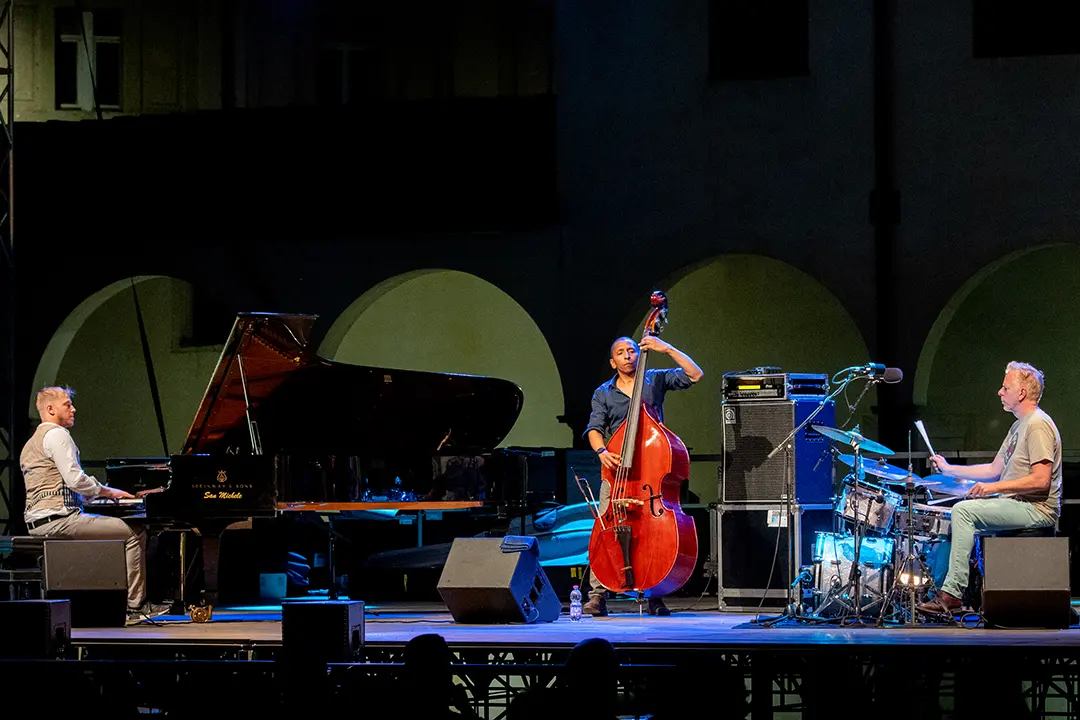
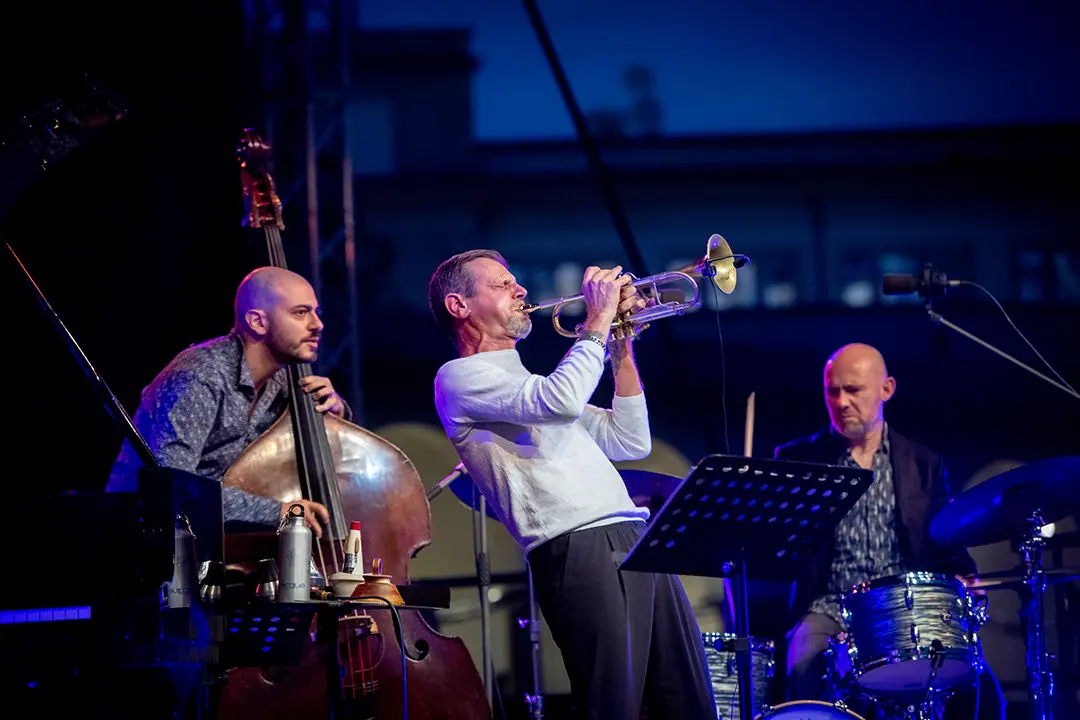
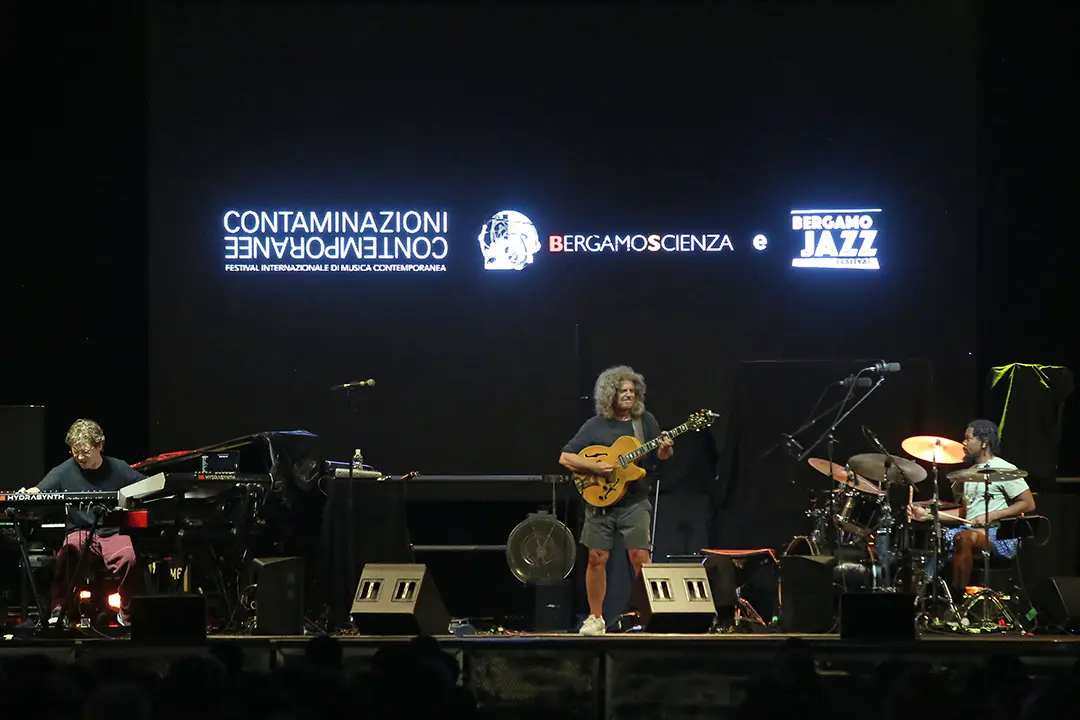
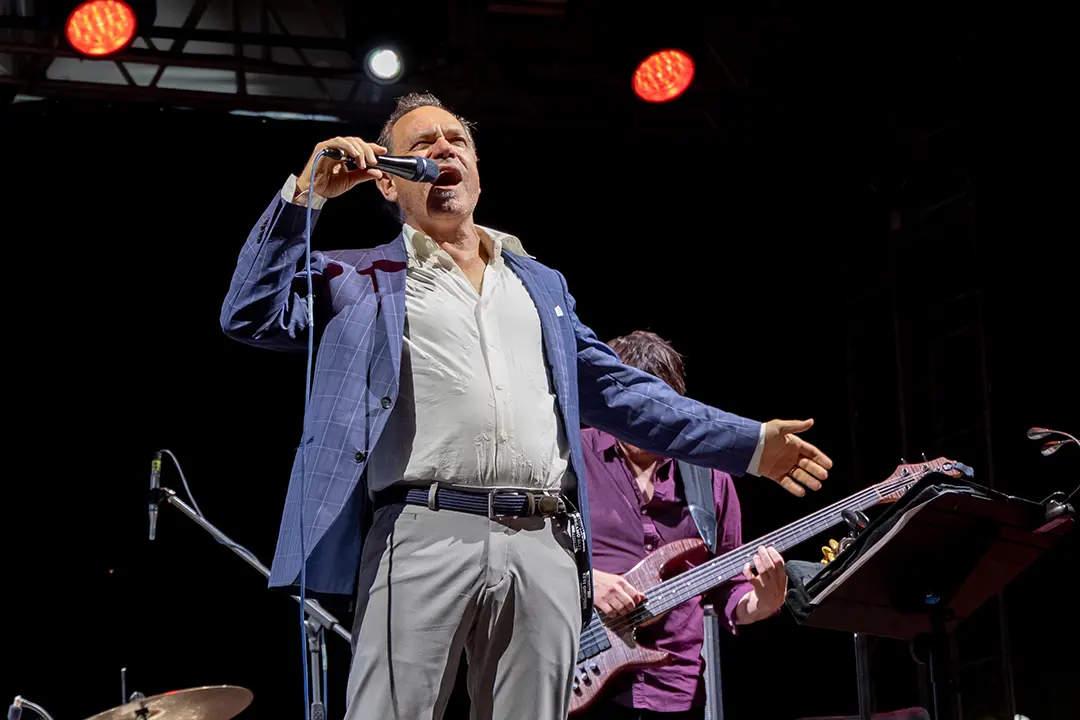
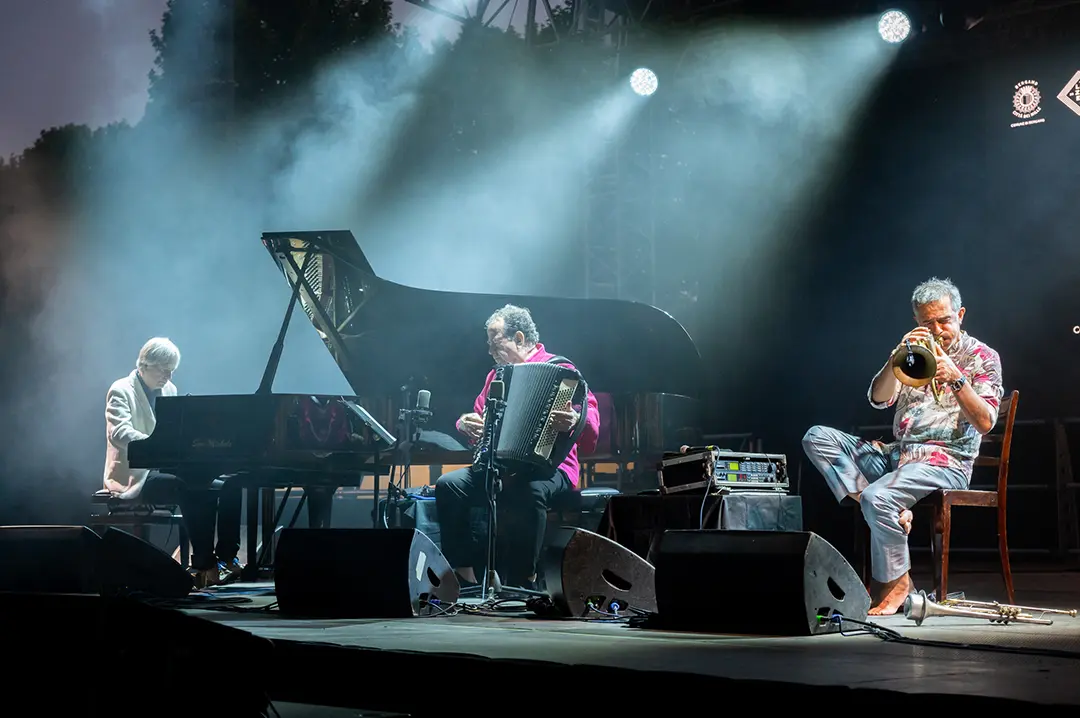
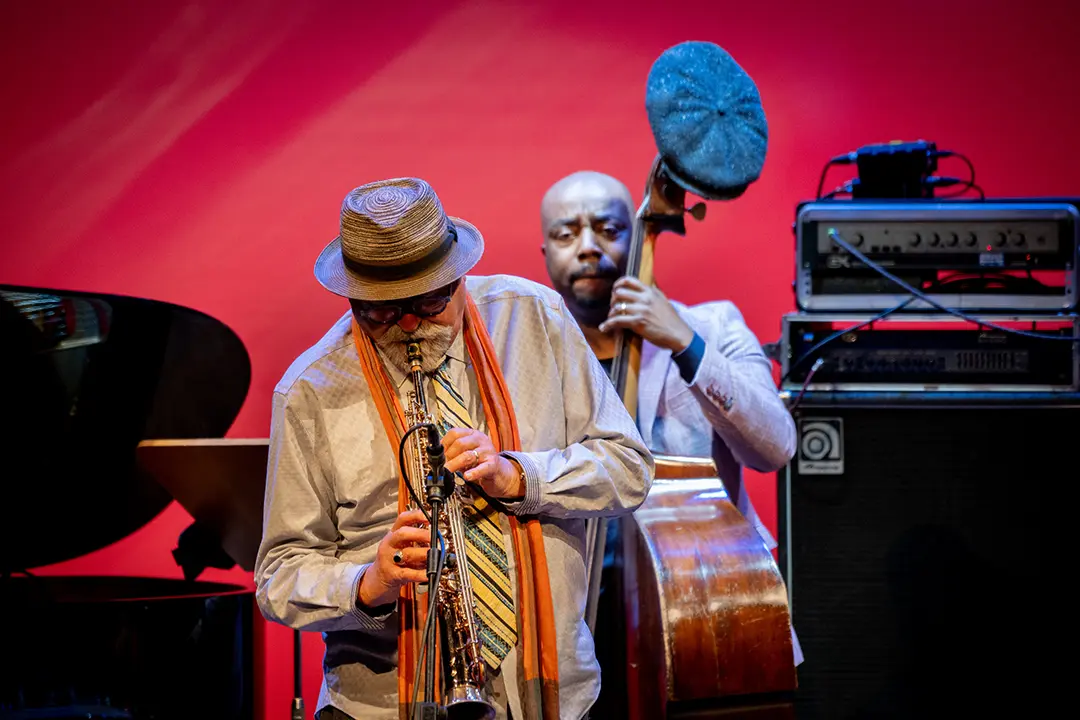
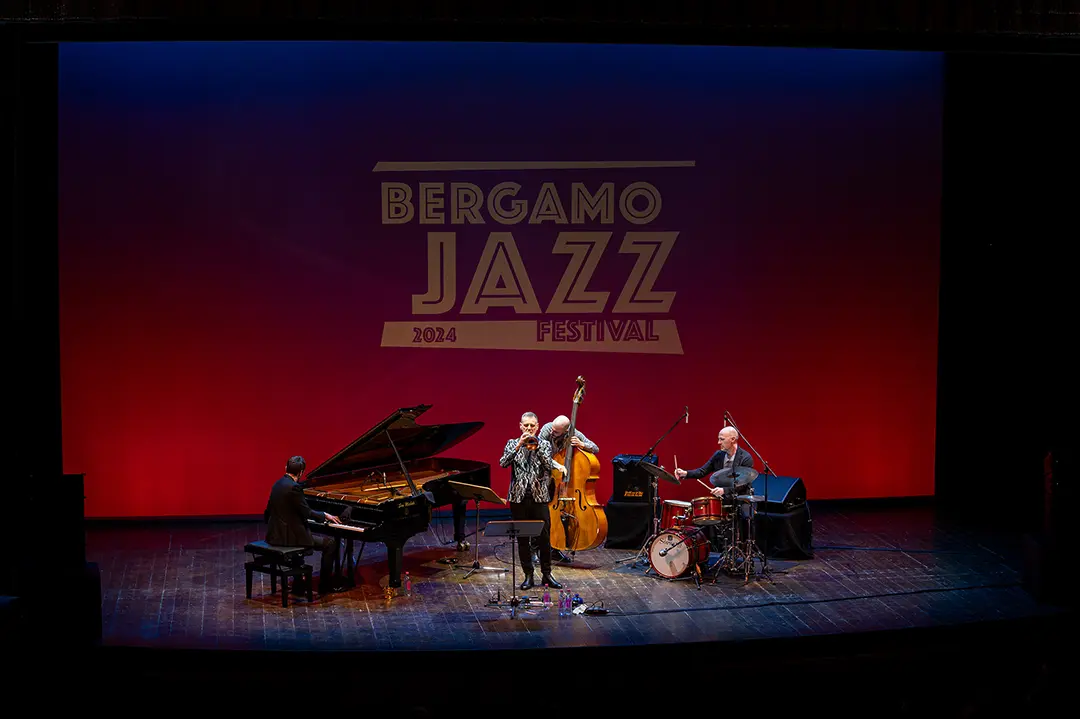
In 2024, the artistic direction of Bergamo Jazz passed from Maria Pia De Vito to Joe Lovano, a saxophonist and composer of absolute international prominence, who wanted to give the festival a personal touch with a look at both the jazz tradition and its future projections. In his first year in office, Lovano has invited: Dave Burrell, Danilo Perez with John Patitucci and Adam Cruz, the Fabrizio Bosso Quartet, the poet Moor Mother, John Scofield, Miguel Zenon, Naissam Jalal, Bobby Watson, Don Moye, with an exclusive project celebrating 50 years since the Art Ensemble of Chicago’s first concert in Bergamo, Federica Michisanti with Louis Sclavis, Ana Carla Maza, Abdullah Ibrahim, the Modern Standards Supergroup, and the Emanuele Cisi/Salvatore Bonafede duo. Finally, for International Jazz Day, a concert by pianist Simone Graziano was held on the Mura Venete, a UNESCO-protected property.
Importantly, Bergamo Jazz has long been a point of reference for other city entities, such as the Bergamo Film Meeting film festival, with the passing of the baton between the two festivals, the Festival Danza Estate and the Centro Didattico Produzione Musica, which each year curates meetings aimed at primary and secondary school students. Since its launch year, 2017, the “Sparks of Jazz” section has then continued to be a showcase for young talent.
Bergamo Jazz is part of I-Jazz, an association of more than 80 jazz festivals spread throughout the country, and the network of environmentally sustainable festivals “Jazz Takes The Green.”